
Electronic conspicuity in European general aviation is no longer a concept paper. Pilots across the UK, France, Germany and Switzerland are already flying with portable ADS-B receivers, FLARM units and network-based tools that make them visible to other aircraft and ground systems. The question is no longer whether EC will arrive. It is here, and adoption is accelerating. This article covers where things stand right now: who is using electronic conspicuity, what programs are driving adoption, and how portable receivers have become the primary vehicle for getting GA pilots connected.
For a broader introduction to what EC actually is and how the technology works, see our complete guide to electronic conspicuity and portable ADS-B.
Where EC Adoption Stands Country by Country
Adoption is uneven across Europe, shaped by each country's regulatory culture, airspace complexity and the strength of its GA community. A few countries have moved faster than others.
United Kingdom
The UK has been the most aggressive adopter. The CAA's Electronic Conspicuity Rebate Scheme, which ran from 2020 through March 2024, reimbursed GA pilots up to 50% of a device's cost (capped at £250). Thousands of pilots took advantage of it. The scheme targeted portable devices specifically, recognising that most GA aircraft in the UK fleet (Cessna 152s and PA-28s at flying clubs, vintage Chipmunks, microlights operating out of farm strips) would never justify a five-figure panel installation.
The result has been measurable. Airfields like Sywell, Duxford and Old Warden now see far more electronically visible traffic in their circuits than they did five years ago. SkyDemon and PilotAware ground station networks provide coverage across much of England, feeding traffic data to pilots who carry portable receivers.
France and Switzerland
France has a large GA community and a long tradition of gliding and ultralight flying. FLARM adoption among French glider pilots has been strong for over a decade, and many powered GA aircraft in southern France carry FLARM or PowerFLARM units. SafeSky's network has grown significantly in France, with pilots using the app and compatible hardware to share their position with nearby traffic.
Switzerland follows a similar pattern, driven partly by the density of glider operations in Alpine valleys where terrain makes see-and-avoid genuinely difficult. Swiss airfields like Bex, Samedan and Bern-Belp see high levels of FLARM and EC device usage, especially during summer soaring season.
Germany
Germany's GA community is large but has been slower on portable ADS-B adoption compared to the UK. FLARM is common among glider pilots, but many powered GA aircraft still fly without electronic conspicuity. The German aviation authority (LBA) has not run a rebate scheme comparable to the UK's, though interest is growing as EASA's ADS-L coalition raises awareness.
The Programs and Incentives Driving Adoption Today
EC adoption is not happening by accident. Several concrete programs are pushing it forward right now.
The UK CAA's rebate scheme was the clearest example of government action. By subsidising devices that cost £300 to £500, the scheme made it financially easy for a club pilot or student to pick up a portable receiver. The scheme's closure in March 2024 did not stop adoption, but it did remove the strongest financial incentive. There is ongoing discussion about whether a follow-up programme could be launched.
SafeSky has emerged as the most significant network-based platform for EC in Europe. The Brussels-based service aggregates traffic data from over 30 sources: ADS-B ground stations, FLARM networks, OGN (Open Glider Network), radar feeds and app-based position sharing. Pilots running SafeSky on a phone or tablet broadcast their position to the network while receiving traffic from all connected sources. The coverage is densest in the Benelux countries, France, Switzerland and the UK.
EASA's ADS-L coalition brings manufacturers, service providers and national authorities together to coordinate interoperability standards. The coalition's work is ongoing and practical. Rather than designing a single mandated technology, it promotes the idea that ADS-B, FLARM, SafeSky and similar systems should all feed into a common picture. A Grob 109 motorglider with FLARM should be visible to a Cirrus SR22 with ADS-B In, and vice versa. That interoperability is the coalition's central goal. For more on where the coalition is heading, see our post on EASA's ADS-L and conspicuity initiatives.
Real-World Adoption: Who Is Using EC and Where
The pilots adopting EC first are the ones who feel the need most acutely.
Glider pilots were early movers. Mid-air collision risk is a constant concern when thermals concentrate multiple aircraft in a small volume of air. FLARM has been near-universal in European gliding for years. More recently, glider pilots have added SafeSky and OGN connectivity to extend their visibility to powered traffic that does not carry FLARM.
Training aerodromes see high benefit. A busy circuit at a field like White Waltham, Elstree or Toussus-le-Noble on a Saturday morning can have a dozen aircraft in a tight pattern. Portable EC devices give student pilots and their instructors an extra layer of awareness during the phase of flight where workload is highest and closure rates are fastest.
Cross-country VFR pilots flying through uncontrolled airspace at 2,000 to 4,000 ft AGL are another group adopting quickly. These pilots regularly pass through areas with no radar service and limited radio coverage. A portable receiver that shows traffic on a tablet running SkyDemon or ForeFlight fills a genuine gap in situational awareness.
Fly-in events and airfield open days have also become proving grounds. Large gatherings (like the LAA Rally at Sywell or Aero Friedrichshafen) concentrate hundreds of aircraft in a small area, and organisers increasingly encourage or require EC devices for participating aircraft.
Portable Receivers as the Primary Adoption Vehicle
Panel-mounted ADS-B Out transponders remain the gold standard for certified operations. But the practical reality for most European GA pilots is that portable receivers are doing the heavy lifting in EC adoption. The reasons are straightforward.
Cost is the most obvious factor. A portable ADS-B receiver runs between €300 and €1,000 depending on features. A certified panel installation with ADS-B Out typically costs €3,000 to €15,000, requires shop time, and takes the aircraft offline for days or weeks. For a pilot renting a PA-28 at a flying club, a panel installation is not even an option. A portable device is.
Portability itself matters. A device that moves between aircraft means a pilot who flies a club Cessna 172 on weekdays and a syndicate Robin DR400 on weekends can carry the same receiver to both. Flight schools can share devices across their fleet or encourage students to own one from the start.
Modern portables also align well with the ADS-L vision of interoperability. Devices that combine dual-band ADS-B reception (1090 MHz and 978 MHz where relevant) with SafeSky integration and GDL90 output to tablets create exactly the kind of multi-source traffic picture that EASA's coalition envisions.
The limitation is real but well understood: portable receivers provide ADS-B In (you see other traffic) but not certified ADS-B Out (other traffic sees you). For broadcasting your position, you rely on SafeSky's app-based sharing or a separate transponder. That said, the "see" half of "see and be seen" is enormously valuable on its own, especially in uncontrolled airspace where no one is providing traffic separation.
SkyRecon and the EC Landscape
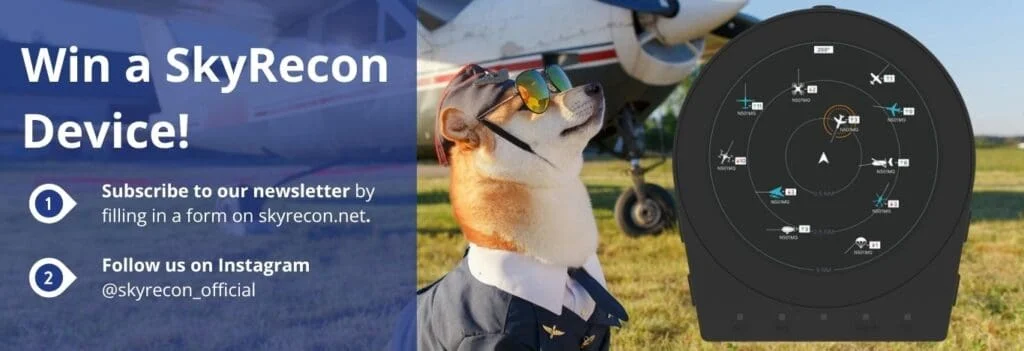
SkyRecon was designed with Europe's EC environment in mind. It combines dual-band ADS-B reception with SafeSky Inside integration, pulling in traffic from 30+ sources beyond traditional ADS-B. The built-in 3.4" cockpit display means traffic information is always visible without relying on a tablet, and continuous CO monitoring adds a safety layer that most portable receivers lack entirely.
For pilots looking at how a portable receiver fits into the current EC picture, the SkyRecon features page covers the full specification.
What This Means for Your Next Flight
Electronic conspicuity adoption in Europe is past the early-adopter phase. Tens of thousands of GA pilots across the UK, France, Switzerland and beyond are already flying with devices that make them visible and help them see other traffic. The UK's rebate scheme proved that modest incentives can drive rapid uptake. SafeSky's growing network demonstrates that community-driven data sharing works. EASA's ADS-L coalition is building the standards to tie it all together.
If you are flying GA in Europe without any form of electronic conspicuity, you are increasingly in the minority. A portable ADS-B receiver is the simplest way to close the gap. Pick one up, connect it to your EFB, and start flying with a traffic picture that extends well beyond what your eyes can cover.
For a look at where EC regulation is heading next, including EASA's roadmap and likely future requirements, see our post on the future of electronic conspicuity in European GA.