
It's a summer weekend at a busy uncontrolled airfield. The radio is alive with calls: downwind, final, touch-and-go. Not everyone is perfectly clear or following standard patterns. You're joining the circuit and need to slot in safely, but the aircraft you heard call downwind isn't where you expected it. A portable ADS-B receiver on the glare shield shows it clearly: turning base early, 200 feet below you, half a mile ahead. You widen your downwind leg and sequence behind it. Conflict avoided.
That scenario plays out daily at training airfields across Europe. The EASA 2022 Safety Review found that over 60% of mid-air collision incidents involved aircraft that were not seen until the final seconds before near-contact. Portable ADS-B receivers address this by providing real-time traffic directly to electronic flight bags (EFBs) like ForeFlight, SkyDemon, or EasyVFR, visualising altitude, heading, and distance on a continuously updating moving map.
For GA pilots, this kind of situational awareness is the foundation of safe and confident flying, from the circuit to the cross-country.
**Circuit Operations: Where Every Second Counts**
Circuit work is where workload peaks for many pilots, especially students and newly qualified PPLs. Radio discipline helps, but not every pilot makes clear calls, and not every aircraft is on frequency. A portable ADS-B receiver fills the gap by revealing aircraft that might not yet be visible: one turning base early, another entering from the crosswind side, a third climbing out from the opposite runway direction. Having that extra visual context on your display reduces uncertainty, helps anticipate conflicts, and lets you position more confidently within the pattern.
This kind of traffic awareness directly reduces pilot workload during the most demanding phase of a training flight.
**Cross-Country: Where the Benefits Multiply**
On a cross-country flight, a pilot cruising at 3,500 feet over rural terrain might see very little traffic visually. The human eye, even under ideal conditions, has limited detection capabilities. A small GA aircraft at a distance of 2-3 NM can be almost invisible against terrain or cloud backdrops. With ADS-B In, these aircraft appear on your tablet or cockpit display long before you could have detected them visually, giving you precious seconds or minutes to plan and avoid conflict.
For example, during a VFR leg across the Midlands at FL035, your EFB shows a faster aircraft converging from the east, same altitude, closing at 50 knots. You descend 500 feet. Three minutes later it passes above. Without ADS-B In, that aircraft might not have been visible until the final 15 seconds.
Portable ADS-B also complements cross-border flying, where electronic conspicuity standards and equipment vary between countries. Some UK pilots prefer PilotAware or SkyEcho for local network compatibility, while continental European pilots lean toward FLARM or ADS-B receivers supporting EASA's upcoming ADS-L standard. Portable receivers bridge these ecosystems, enabling visibility across multiple data sources rather than relying solely on traditional transponder signals.
**Portable Power: Affordable and Flexible**
Unlike panel-mounted avionics costing tens of thousands of euros and requiring certified installation, portable ADS-B receivers deliver many of the same safety benefits at a fraction of the cost. Most quality portable receivers are priced between 500 and 1,200 euros, compared to the 15,000 to 40,000 euro range typical for full panel systems with integrated transponders and weather overlays.
Installation is plug-and-play: most units power up from a USB port and connect via Wi-Fi or Bluetooth. No downtime, no maintenance appointments. Portability means flexibility too. You can take the device from aircraft to aircraft, ideal for pilots who rent or fly multiple types.
**The Human Factor: Awareness as a Life-Saving Asset**
Accidents rarely stem from a single error. They result from a chain of missed cues and misjudged assumptions. The UK's Airprox Board reports that over 70% of airprox incidents occur because one or both pilots never saw the other aircraft in time.
Technology like ADS-B In complements see-and-avoid practices. It reinforces them, turning an uncertain, high-stress environment into one where pilots have confidence in what's around them. During long solo flights, this awareness also reduces fatigue and cognitive load. Instead of relying solely on scanning the horizon, the pilot can verify information against the electronic display, catching potential conflicts early.
The picture gets even richer when ADS-B data is combined with supplemental traffic sources like FLARM, OGN, and SafeSky network feeds, filling gaps where some aircraft aren't broadcasting ADS-B Out.
**SkyRecon: Multi-Source Awareness in a Portable Package**
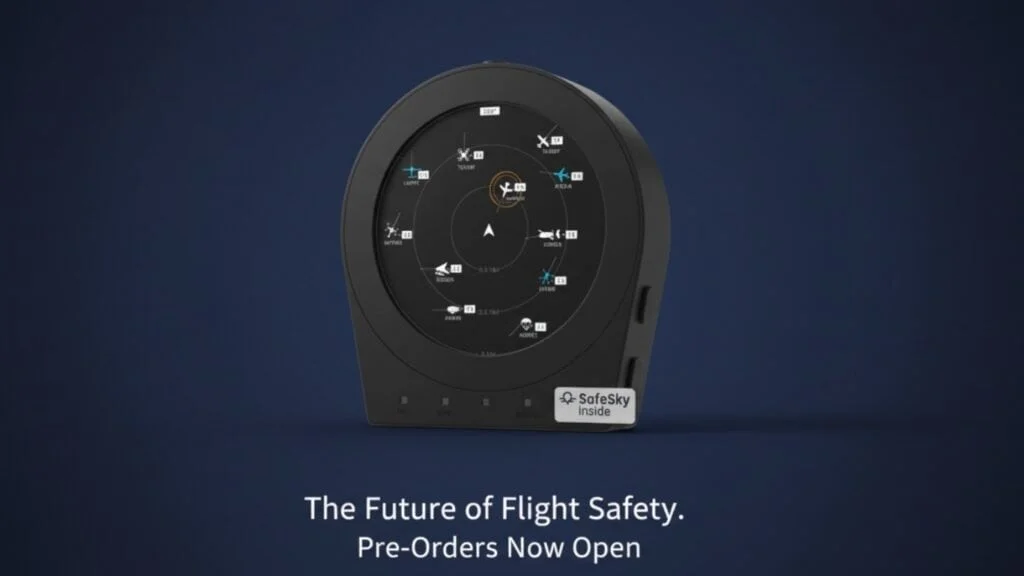
SkyRecon represents the next generation of portable ADS-B receivers. It integrates SafeSky Inside, merging traditional ADS-B and multilateration data with cooperative information from SafeSky's connected network of pilots and ground stations. SkyRecon users don't just see aircraft transmitting ADS-B. They also gain visibility of aircraft sharing position data via the SafeSky network, which currently processes more than one million position reports per hour across Europe.
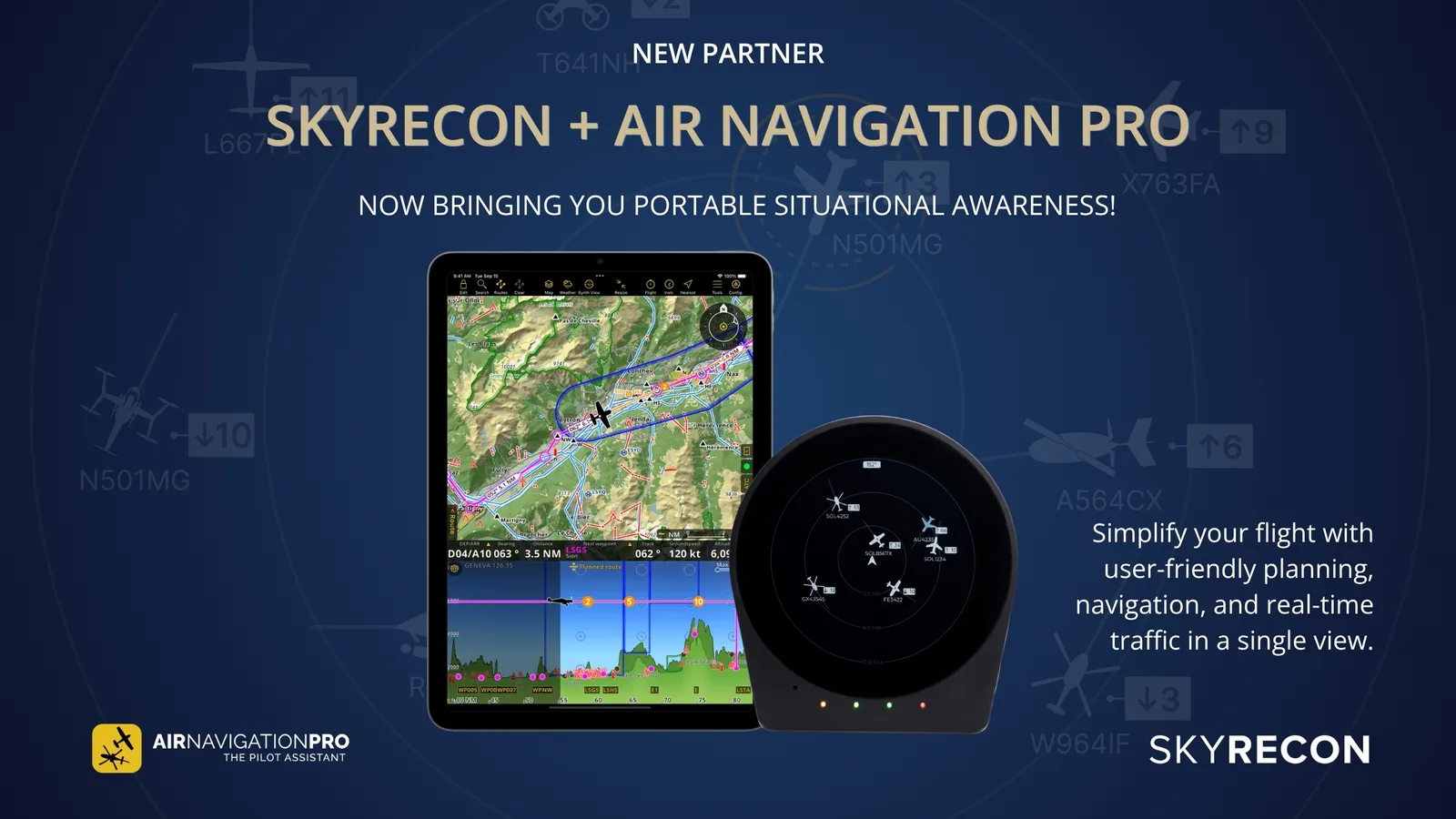
Connected to ForeFlight, SkyDemon, or EasyVFR, SkyRecon overlays both ADS-B and SafeSky data directly on your navigation map. This multi-source visibility dramatically reduces blind spots, especially in regions with mixed equipment adoption: gliders, ultralights, or vintage aircraft that may not yet be broadcasting ADS-B Out.
SkyRecon's real-time fusion of airspace data helps fulfil EASA's electronic conspicuity goals, giving every pilot, regardless of aircraft type or budget, access to higher levels of awareness.
**Fly With Context, Not Guesswork**
Portable ADS-B receivers have transformed how GA pilots think about airspace awareness. They bring advanced situational insight into the cockpit without the prohibitive costs or limitations of fixed avionics. From the training circuit to transnational VFR routes, these devices give pilots the information they need most: where others are, where they're heading, and how to stay clear.
The technology doesn't replace good airmanship. It strengthens it. And for a pilot joining a busy circuit on a Saturday afternoon or cruising a quiet cross-country leg, that extra layer of awareness is the difference between hoping no one is there and knowing for certain.
See how SkyRecon enhances your flying