A newly licensed PPL pilot turns base to final at a busy airfield. Another aircraft was reported on downwind, but between radio chatter and maneuvering, visual contact is gone. Workload spikes. The scan splits between outside, instruments, and radio. Situational awareness narrows as stress builds.
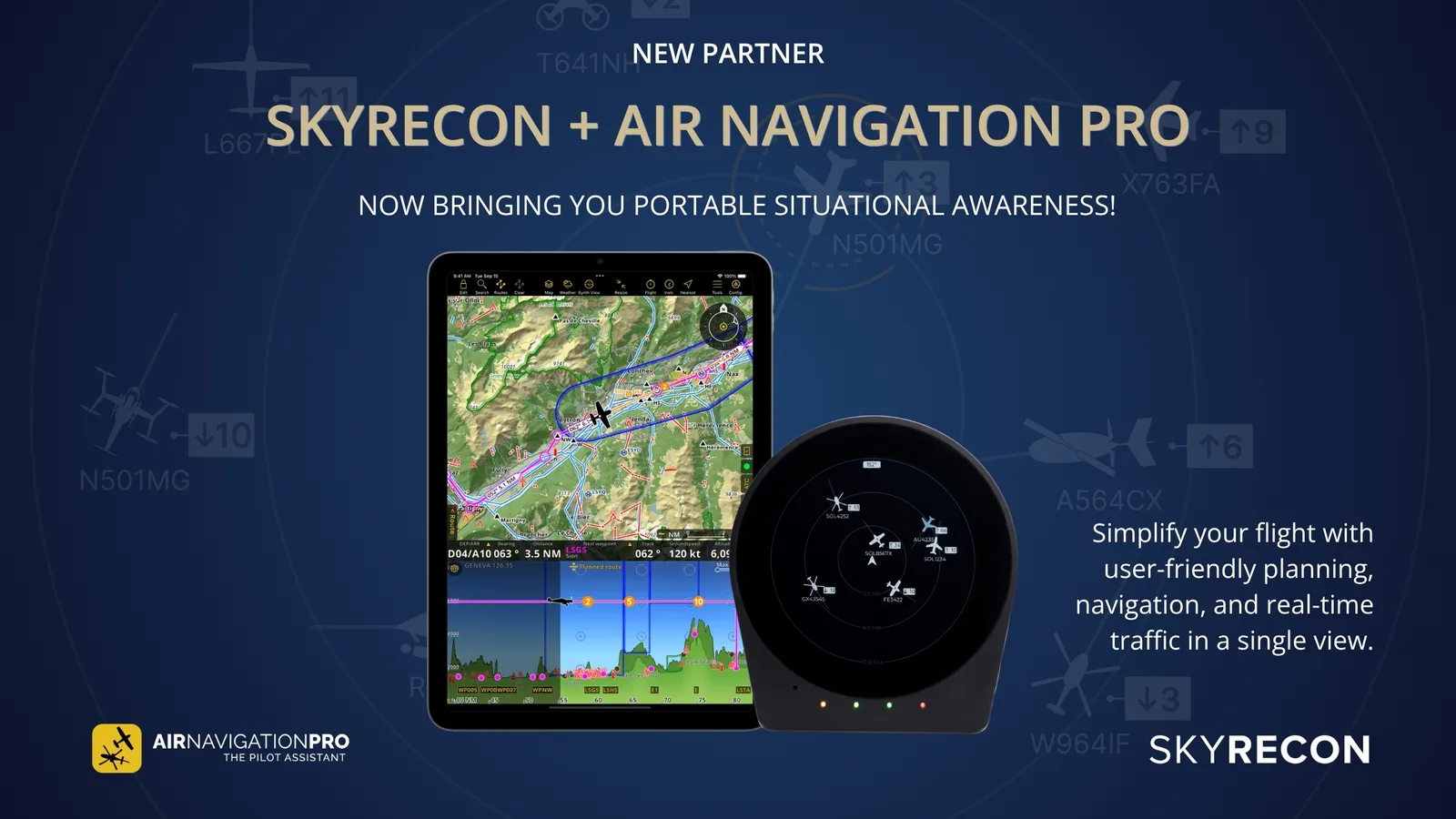
Now picture the same pilot with a portable ADS-B receiver connected to a flight tablet. Turning base, the display highlights nearby traffic: the aircraft on downwind, another entering crosswind, each showing altitude and direction. The pilot makes a calm, informed radio call and adjusts spacing early. Lower stress, earlier decision-making, and a circuit flown with confidence.
That contrast captures what ADS-B workload reduction looks like in practice. The technology doesn't replace vigilance or flying skill. It shifts the workload from reactive to proactive, giving pilots the data to anticipate rather than scramble.
The Cognitive Load of the Modern GA Pilot
Flying under visual conditions demands constant multitasking: navigation, altitude, airspeed, communications, and visual scanning, all while maintaining situational awareness. According to the FAA's General Aviation Activity Survey, human factors including task saturation and loss of situational awareness contribute to nearly 30% of GA incidents each year.
This mental strain is most acute among pilots under 500 flight hours who are still internalizing scan patterns and workload management techniques. The difference between maintaining a stable approach and missing a traffic callout often lies not in flying skill but in cognitive bandwidth.
A portable ADS-B receiver automates part of the "see and avoid" process by digitally visualising surrounding traffic, aircraft that might otherwise go unnoticed until too late. This is a core part of what makes electronic conspicuity so valuable for the GA community.
What a Portable ADS-B Receiver Actually Does
ADS-B (Automatic Dependent Surveillance-Broadcast) is the backbone of modern situational awareness in general aviation. Each equipped aircraft continuously broadcasts its GPS-derived position, altitude, ground speed, and identification via a digital data link. A portable ADS-B receiver like SkyRecon listens to these transmissions (known as "ADS-B In") and displays nearby traffic directly within your preferred flight app: ForeFlight, SkyDemon, SafeSky, or EasyVFR.
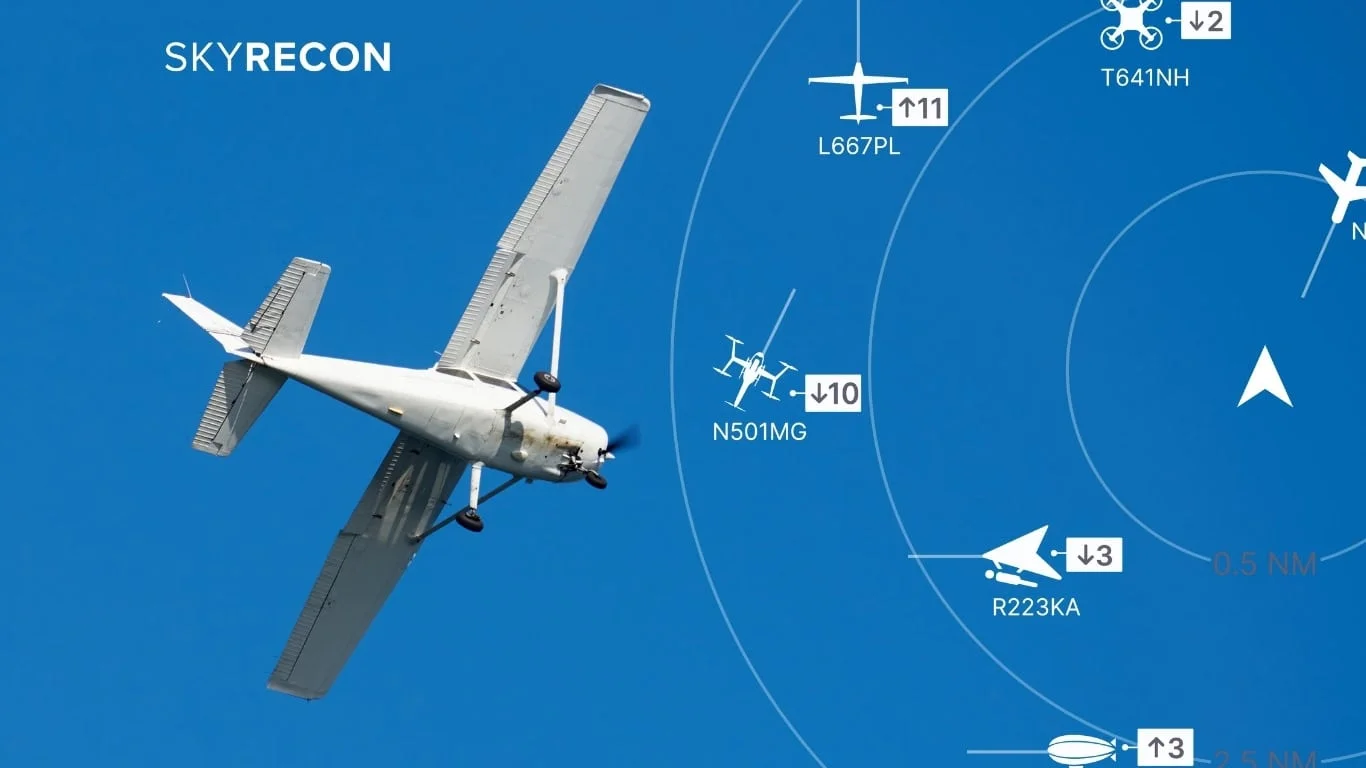
For a GA pilot, this means your tablet effectively becomes a live traffic radar, visualising aircraft within a 30-40 nautical mile radius, often well before visual contact is possible. During a climb-out from a busy training airport like Lelystad (EHLE) or Oxford (EGTK), you can see converging aircraft in the pattern and adjust your climb or circuit entry accordingly, without relying solely on spotters or ATC advisories.
EASA noted in its 2022 Annual Safety Review that mid-air collisions remain one of the top three causes of fatal general aviation accidents in Europe, primarily during VFR operations in uncontrolled airspace. These incidents often occur in "see and avoid" environments where multiple aircraft share the same traffic pattern or practice area. While visual scanning remains fundamental, it has clear limits: cockpit workload, visibility, glare, and physiological blind spots all reduce the effectiveness of human perception.
FAA safety assessments indicate that pilots using ADS-B In data experience up to a 50% lower risk of mid-air conflicts compared to unequipped aircraft. By identifying converging traffic earlier and displaying altitude differentials in real time, the technology transforms awareness from reactive to predictive. That translates directly to reduced workload and greater confidence, especially for newer pilots still mastering scan patterns and radio coordination.
In-Flight Scenarios: Where Reduced Workload Becomes Real
The circuit scenario above illustrates the difference in high-workload pattern operations. The benefits multiply on cross-country flights. A pilot cruising on a long leg between uncontrolled fields, instead of waiting for a traffic advisory or straining to spot small, fast-moving targets, receives continuous situational updates. More mental energy stays available for fuel management, navigation, and communication: the tasks that really matter.
Consider a VFR flight at 3,500 feet over rural France. The pilot's tablet shows three aircraft within 15 NM, none visible to the eye yet. One is descending from the opposite direction at a similar altitude. Without ADS-B In, that converging traffic remains invisible until perhaps the final few seconds before a near-miss. With it, the pilot has minutes to plan a level change or heading adjustment. The workload difference is enormous.
This kind of proactive traffic management is what situational awareness looks like in practice, from circuit to cross-country.
Confidence That Grows With Experience
For pilots still early in their flying journey, with under 200 or even 100 flight hours, situational awareness is often the steepest learning curve. Managing radio calls, traffic scans, navigation, and aircraft control simultaneously pushes mental workload to its limits. Technology, when designed right, helps bridge that experience gap.
In a 2023 UK Civil Aviation Authority (CAA) survey, 68% of GA pilots reported that electronic conspicuity tools like ADS-B significantly improved their confidence during flight, especially when transitioning between controlled and uncontrolled airspace. Nearly half of those pilots had fewer than 300 flight hours, underscoring how early adoption pays dividends. As one respondent put it: "It's like having a second pair of eyes that never gets tired or distracted."
On a popular online flying forum, one PPL pilot with 120 hours described their first flight with a portable ADS-B receiver as "a complete mindset shift." They recounted spotting converging traffic on their tablet long before making visual contact: "Before, I was constantly scanning and second-guessing whether I was missing something. Now, I'm still scanning but with context. I know where to look."
A 250-hour time-builder flying near Los Angeles' crowded Bravo airspace noted that portable ADS-B In transformed how he managed workload during solo flights: "It's not about flying lazily. It's about flying smarter. Seeing traffic trends early means I can plan my turns, climbs, and descents with confidence instead of reacting at the last second."
This sense of proactive awareness is particularly empowering for younger pilots under 35, many of whom fly club or rental aircraft that lack built-in avionics suites. Because portable ADS-B receivers require no modification or downtime, they deliver immediate benefits. Plug it in, connect your tablet, and you're safer within minutes.
For pilots on a budget, this accessibility matters. Traditional panel-mounted traffic systems can cost upwards of $5,000 to $10,000, while a high-quality portable ADS-B receiver delivers similar awareness for a fraction of the price. There are clear practical reasons why portable is the smart choice for a pilot building hours toward a commercial licence. The common takeaway among new and low-hour pilots is clear: confidence comes from clarity. And clarity starts with knowing what's around you.
The Simplicity of Integration: Less Setup, More Flying
Panel-mounted avionics can provide extraordinary capability, but installation costs often exceed 5,000 to 10,000 euros, with downtime lasting days or weeks. Portable ADS-B receivers, by contrast, typically cost under 1,000 euros, require zero installation, and start working within minutes of power-up. For a detailed comparison of portable versus panel-mounted options, the trade-offs are worth examining.
By connecting wirelessly via Wi-Fi or Bluetooth to popular EFB apps, portable receivers automatically feed real-time traffic and weather information into the pilot's familiar interface. No certification. No modification. No waiting.
This simplicity matters not just for convenience but because it reduces the "setup workload" as well. The less time a pilot spends troubleshooting or switching screens, the more attention stays focused on actual flying.
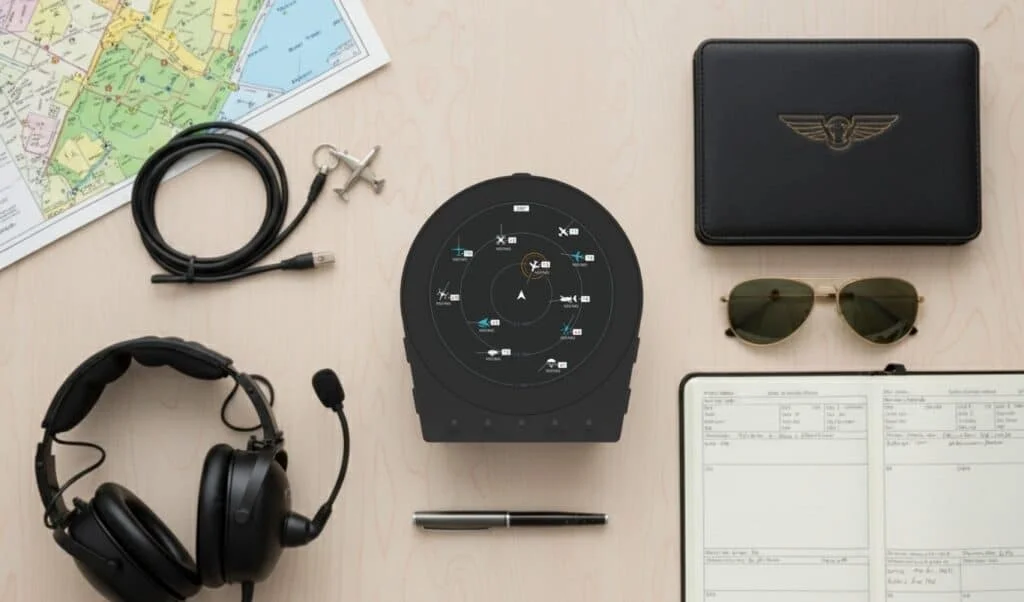
SkyRecon: Built to Help Pilots Fly Smarter
SkyRecon was designed around a single principle: situational awareness for everyone. Our engineering team recognised that while electronic conspicuity is the future of GA safety, it had to be accessible, portable, and effortless to truly make an impact.
SkyRecon combines ADS-B In reception, SafeSky network data, and integrated CO detection in one compact unit. By merging live broadcast data with internet-fed positional feeds from SafeSky's vast European network (drawing from over 250,000 connected aircraft and 60+ partner data sources), SkyRecon provides pilots with a uniquely complete picture of the sky.
For GA pilots, this translates to smarter flying: less guessing, more anticipating. Climbing through haze on a training flight, cruising beneath controlled airspace on a cross-country, or managing a busy pattern on a sunny weekend: SkyRecon helps you make faster, safer decisions in every phase of flight.
Core features include ADS-B In reception for real-time traffic data from nearby aircraft broadcasting on 1090 MHz. SafeSky network integration adds traffic and positional data from over 250,000 connected aircraft and 60+ partner sources across Europe. The integrated CO detection sensor provides early warning for carbon monoxide exposure in piston-engine aircraft. It connects seamlessly with ForeFlight, EasyVFR, SkyDemon, and other popular EFB apps. The compact, battery-powered design requires no permanent installation. Real-time visual and audible alerts for nearby traffic or potential hazards help pilots anticipate rather than react. And cross-border coverage maintains situational awareness across fragmented European airspace.
Less Mental Strain, More Mental Space
Reducing pilot workload isn't about adding more automation. It's about simplifying awareness. Every piece of information presented cleanly and early gives a pilot more time, more clarity, and more confidence.
A portable ADS-B receiver turns the invisible into visible, the uncertain into manageable. For pilots stepping into increasingly dynamic skies, it's not just a tool. It's an equaliser.
Flying smarter doesn't mean relying less on skill. It means empowering that skill with better awareness.
See how SkyRecon reduces cockpit workload