A Garmin GTX-345 panel installation runs around US$7,000 in the best case. A full avionics overhaul with dual G5s, transponders, and radios can hit $37,000 with labour and custom panel work. A portable ADS-B receiver costs a few hundred to a couple of thousand, works within minutes of opening the box, and moves between aircraft.
Those numbers frame the central question GA pilots face when equipping for electronic conspicuity: invest in a certified, panel-mounted system or opt for a portable receiver that offers flexibility and affordability? With mid-air collision risks, congested airspace, and increasing regulatory focus on EC, the decision affects both safety and practicality.
This article breaks down the real-world trade-offs in cost, installation time, flexibility, and connectivity, supported by statistics, pilot accounts, and operational data.
Cost Comparison: Upfront, Installation, and Maintenance
Panel-Mounted Avionics Costs
Installing certified panel avionics (ADS-B Out transponders, combined ADS-B In/Out units, integrated displays) typically involves significant expense. A system like a Garmin GTX-345 starts at around US$7,000 including installation in favourable conditions, according to Gulf Coast Avionics. More broadly, many panel-mounted ADS-B Out systems cost between US$5,000 to US$20,000 including parts and labour, depending on aircraft type and complexity.
Labour alone can add substantially. Pilots on Reddit estimate US$5,000 to $10,000 in labour for modest installs. One pilot reported a full panel upgrade costing nearly US$37,000 including labour and custom panel work.
Portable ADS-B Receiver Costs
Portable devices are significantly cheaper. Basic portable ADS-B receivers cost a few hundred to a couple thousand dollars/euros depending on brand and capabilities. The device itself represents most of the cost: there's minimal labour, no structural or panel modifications, and most integrate as plug-and-play. Maintenance costs are low, mostly firmware updates, occasional power or battery management, and ensuring antennas or mounts are secure.
The upshot: If budget is tight or you fly a rental/club aircraft where you can't justify major investments, a portable ADS-B receiver offers most of the safety-improving benefits at a fraction of the cost. Panel installs are heavier investments but offer certified reliability, durability, and integrated features that some pilots prefer for IFR or high-airspace-complexity flying.
Installation Time, Downtime, and Regulatory Considerations
Panel Avionics Installation Time
Installation of panel-mounted units, especially those certified under STC or needing modifications, can take days to weeks. Pilots upgrading to full glass panels plus radios and transponders report waiting 3-4 weeks of shop time, followed by further checkout, wiring, and calibration. Installing a UAT in a GA aircraft may involve 20-30 hours of labour for tail wiring, connectors, panel space, and mounting, plus several calendar days given typical shop backlogs. Lead times for new Garmin panel avionics have been reported at 6+ months, and shop schedules are heavily booked.
Portable Receiver Setup Time
Portable ADS-B receivers require minimal setup. Mount the unit on the glare shield or a suitable location, provide power via battery, USB, or aircraft power, pair to an EFB app, and position the GPS antenna. Total setup: minutes to a couple of hours depending on experience. Almost no airframe alteration required.
Regulatory Differences
Panel avionics meet certified standards, STCs, and often satisfy requirements for ADS-B Out in controlled airspace or under IFR. Portable receivers are usually considered supplemental equipment. They typically don't satisfy ADS-B Out mandates, but they do provide ADS-B In traffic awareness that directly enhances safety. Some regulations or incentive schemes may recognise or subsidise panel installs over portable gear.
Flexibility and Use Case: Matching Equipment to Flying Style
Depending on how, where, and what kind of flying you do, one option may suit you better.
Pilots who fly frequently in controlled, high-traffic, or IFR airspace and regularly rely on ATC will benefit from panel-mounted avionics: certified reliability, redundancy, integrated displays, and regulatory compliance.
Recreational pilots, renters, club members, ultralight and light sport aircraft operators, and those flying in uncontrolled airspace frequently get the most from a portable ADS-B receiver. It provides situational awareness they might not otherwise have and moves between aircraft. There are strong reasons why portable ADS-B makes sense across these flying profiles.
Pilots flying multiple aircraft types or sharing through a club or school benefit from portability. Panel installs don't travel with you. And if you don't want to ground your aircraft for days or weeks and spend tens of thousands, portable solutions avoid that entirely. For pilots who fly only occasionally, the return on investment for a panel install can take many flight hours to justify.
Connectivity, Features, and Situational Awareness
Panel-Mounted Avionics Features
Panel-mounted systems integrate with primary flight displays and MFDs, overlaying traffic and weather directly on the panel for easier scanning with less head movement. They run on certified power supplies, are more rugged, and often include redundant power paths. They're built for continuous, durable operation.
Portable Receiver Features
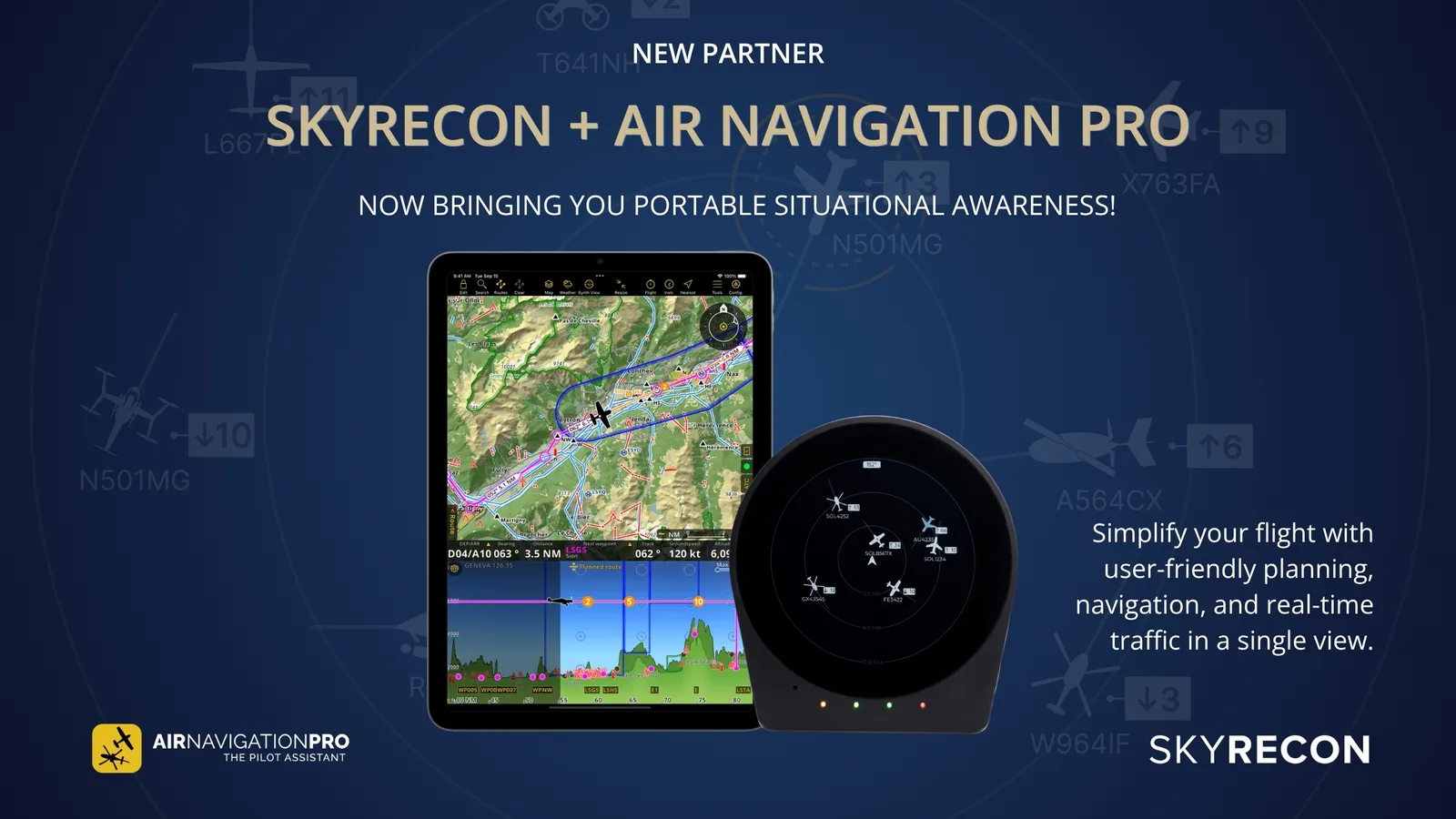
Portable receivers integrate with flight apps on tablets or smartphones, showing real-time traffic on EFBs like ForeFlight, SkyDemon, and EasyVFR. They pull from multiple data sources (ADS-B In, network-supplemented traffic, FLARM in some regions). Some portables, including SkyRecon, have built-in displays that show traffic even without an EFB. Portability also allows firmware updates, network connectivity, and remote data sharing.
What the Safety Data Shows
AOPA published a study showing aircraft equipped with ADS-B In have accident rates reduced by 53% and fatal accident rates reduced by 89% compared with non-equipped aircraft. An ATSB Australia investigation into a near-collision between a Sling light sport aircraft and a Piper Cherokee concluded that if ADS-B In with cockpit display had been present, situational awareness would have been significantly improved.
Real-World Quotes and Pilot Accounts
From a pilot on a GA forum: "I installed my TailBeacon myself. You literally crimp two wires and type your N-number into the app. It took about 30 minutes to install and $150 for install and paperwork."
Another user: "Updating two G5s, full radios, price was agreed up front: '$37K including labor,' a panel overhaul." That same account emphasises that such installs take many hours and often require custom panel work.
These contrast sharply with pilots installing simpler portable receivers or tail beacons where the install is quick and inexpensive.
Trade-Off Summary
| Factor | Portable ADS-B Receiver | Panel-Mounted Avionics |
|---|---|---|
| Upfront Equipment Cost | Low-to-moderate (hundreds to low thousands) | High (thousands to tens of thousands) |
| Installation Time / Downtime | Very low (minutes to hours) | High (days to weeks) |
| Regulatory Compliance | Supplemental, enhances safety, often not accepted for mandated ADS-B Out | Certified, meets mandated standards in many jurisdictions |
| Flexibility (across aircraft) | Excellent, moves between aircraft | Fixed to one aircraft |
| Feature Integration (displays, redundancy) | Good, depends on device and apps; can have own display | Very good, integrated, usually more rugged, possibly redundant |
| Maintenance and Upkeep | Firmware, battery/power, mount; generally low | Higher: physical hardware, panel wiring, certified maintenance, inspections |
Recommendation Based on Flying Profiles
Frequent IFR / Cross-Country / Commercial GA Pilots: If you fly often, rely on ATC, or operate in airspaces requiring certified ADS-B Out, panel avionics with certified ADS-B Out/In plus integration make sense. The long-term investment pays off through reliability, compliance, and seamless integration.
Recreational / Club / Rental Pilots: For pilots flying less frequently, renting, or in legacy aircraft or ultralights, the portable ADS-B receiver provides the best value. You get meaningful situational awareness enhancements with minimal cost and downtime. A portable receiver also reduces pilot workload during the flights that matter most.
Student Pilots and Instructors: Portability is especially useful here. If a training fleet has mixed avionics, carrying your own portable receiver ensures consistent awareness, especially during pattern work or in training airspace.
Aircraft Owners Planning to Keep Aircraft Long-Term: If you intend to own and fly one plane for many years (especially in Europe where regulations may tighten), invest in panel avionics when possible. In the interim, portable receivers can bridge safety gaps effectively.
Budget Tier Comparison
| Budget Level | Type | Popular Models (2025) | Pros | Cons |
|---|---|---|---|---|
| Entry-Level (Under $1,000) | Portable | SkyRecon | No installation required. Works with tablets. Battery-powered and portable between aircraft. Ideal for renters or club pilots. Has its own traffic display. | Not certified for ADS-B Out. Requires charging and mounting. Signal strength depends on cockpit placement. |
| Panel-Mounted | Older or used Garmin GTX 320A (Mode C only) | Permanently installed. Cleaner cockpit integration. | Typically only Mode C (no ADS-B In/Out). No Bluetooth connectivity. Older tech, limited EC value. | |
| Mid-Range ($2,000-$6,000) | Portable | Garmin GDL 50/52, ForeFlight Sentry Plus | Weather, GPS, and AHRS data. Works seamlessly with EFB apps. | Still no certified ADS-B Out. Requires setup each flight. Not integrated with aircraft instruments. |
| Panel-Mounted | Garmin GNX 375, Trig TT31, Appareo Stratus ESG | ADS-B In and Out certified. Fully integrated into avionics. No wires, charging, or mounting issues. | Requires professional installation (15-25 hours, $1,500-$3,000 labour). Not easily transferable. Expensive for rental/club use. | |
| Premium ($7,000-$15,000+) | Portable | N/A (top-tier portables remain under $1,500) | N/A | Portables don't compete in this range. |
| Panel-Mounted | Garmin GTX 345, Avidyne SkyTrax, Dynon SkyView HDX | ADS-B In/Out, traffic, weather, synthetic vision. High reliability, no setup required. Full cockpit integration and certification. | Long install time (up to 40 hours). Major downtime during upgrade. Costly for small operators or shared aircraft. |
The Practical Answer
Choosing between a portable ADS-B receiver and panel-mounted avionics depends on your flying style, budget, risk profile, and aircraft circumstances.
If you fly often in controlled airspace or under regulatory environments requiring certified equipment, the panel route gives you compliance, integration, reliability, and long-term value. If your flying is more flexible, involves multiple aircraft, or you're constrained by budget or downtime, a portable ADS-B receiver offers substantial safety benefits with far fewer trade-offs. The numbers support this: aircraft with ADS-B In see accident rates drop by over 50%, and fatal accident rates drop even more.
In many cases, the best path is a hybrid approach: use a portable ADS-B immediately for safety and situational awareness while planning for panel-mounted upgrades when financially and logistically feasible. Don't delay safety while waiting for the perfect install.