
James Carter, a private pilot with over 600 hours logged, had taken off from Le Touquet for a short cross-channel flight to Belgium in his Cessna 182. Cruising at 2,500 feet under calm winds, cloudless skies, and crisp visibility stretching for miles, everything felt routine. As James would later describe it: "Routine can be deceptive. That's when complacency tries to sneak in."
Halfway through the flight, crossing a corridor used by gliders and light sport aircraft, a small symbol appeared on his navigation display. A single moving dot, barely noticeable at first. It represented another aircraft closing in from his right. Nothing on the radio. No visual contact. Just a digital signal that something was nearby. He adjusted his scan, leaned forward, and searched the horizon. Then he saw it: a small white low-wing aircraft, almost blending into the haze, no more than a mile away at the same altitude.
James immediately altered course, descending 300 feet and turning 20 degrees left. The other aircraft passed harmlessly above and behind him. It was over quickly. But the realisation lingered: without that early cue from his traffic receiver, he might never have seen it in time.
**The Invisible Danger in Clear Skies**
James's experience is not unusual. Across general aviation, near-miss incidents (known as airprox events) are a recurring safety challenge. According to the UK Airprox Board, there were 107 reported near misses in 2023 involving GA aircraft. EASA estimates that roughly six fatal mid-air collisions occur annually in Europe, claiming around 13 lives. Most happen in visual meteorological conditions: the kind of weather pilots consider "good flying days."
The reason is straightforward. "See and avoid," the foundation of VFR flying, is limited by human perception. At a closure rate of 200 knots, two aircraft approaching head-on move from first visual contact to impact in less than 12 seconds. Canopy reflections, terrain blending, glare, and simple distraction can shrink that window further.
ADS-B In (Automatic Dependent Surveillance-Broadcast) bridges this perception gap. It provides a live digital map of nearby aircraft broadcasting their position, altitude, and trajectory. It doesn't replace vigilance. It extends it. Understanding what electronic conspicuity is and how it works makes clear why this technology has become so central to GA safety thinking.
**Why Situational Awareness Matters**
Situational awareness goes beyond knowing your own position. It means understanding the entire environment around you: traffic, weather, airspace restrictions, and your own aircraft's performance. The Flight Safety Foundation lists loss of situational awareness as a factor in nearly 40% of GA mid-air incidents. When multiple aircraft share uncontrolled airspace or operate near busy corridors, awareness becomes the difference between routine and disaster.
In controlled airspace, radar coverage and ATC separation provide structure. But much of GA flying, especially in Europe, happens outside that network. Gliders, ultralights, microlights, and legacy aircraft often fly without ADS-B Out transponders, making them invisible to both radar and other pilots unless seen visually. A portable ADS-B In receiver bridges that gap by bringing those aircraft into the pilot's awareness.
James's story illustrates this precisely. His receiver didn't just warn him of an aircraft. It extended his perception, giving him a digital horizon. The extra 30 seconds of warning allowed a calm, deliberate reaction rather than a panicked last-second manoeuvre.
**Building Technology with Awareness in Mind**
This principle, enhancing situational awareness for every pilot regardless of aircraft type, drove the design of SkyRecon. Engineers and pilots worked to create a portable, high-performance ADS-B receiver serving the diverse European GA community: private pilots, flight schools, glider operations, and ultralight operators.
Many aircraft in Europe were built before the digital age of aviation. Upgrading them with panel-mounted avionics can cost between 5,000 and 15,000 euros per installation. A portable receiver offers the same situational awareness benefits for a fraction of the cost and without grounding the aircraft.
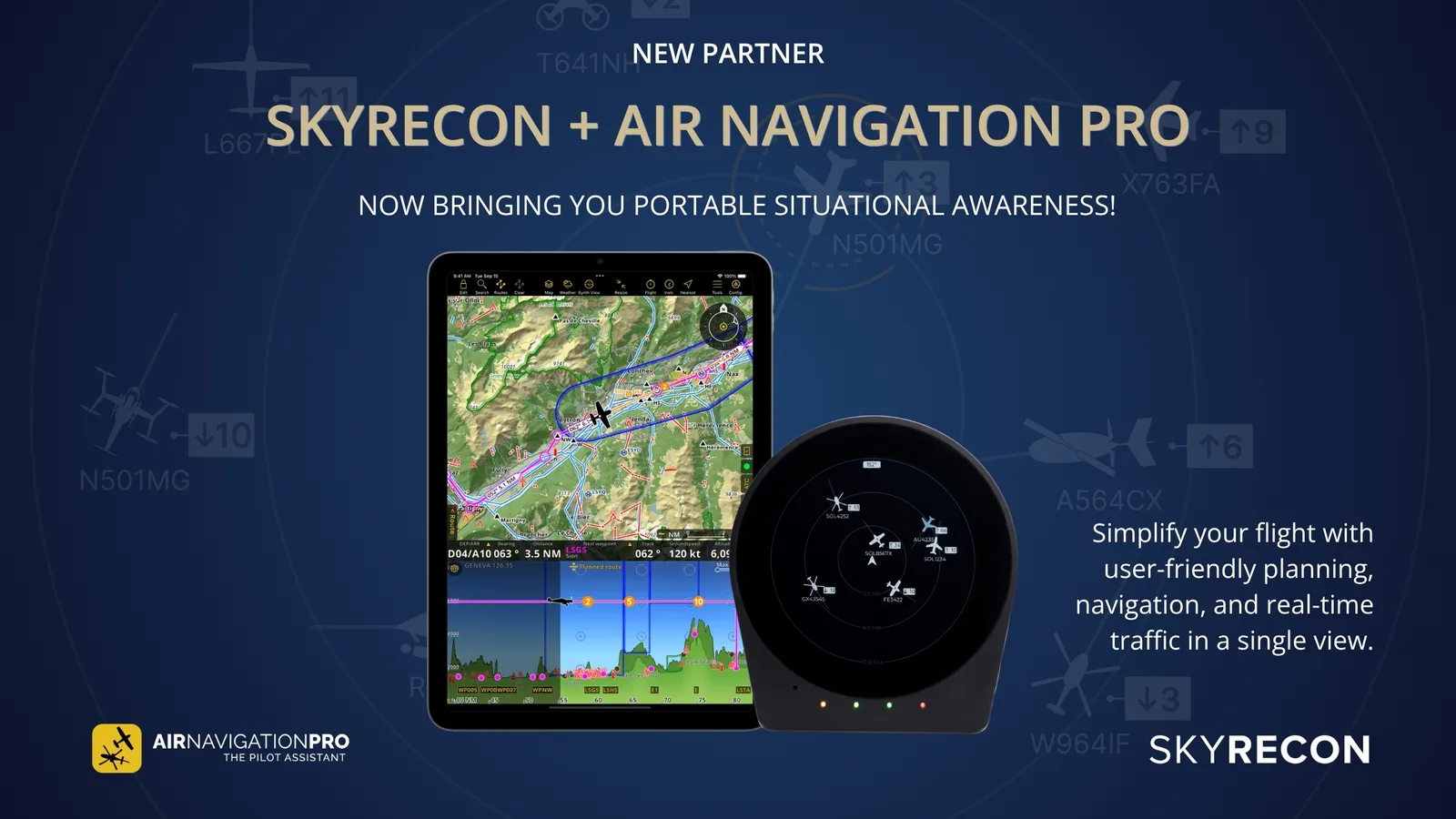
SkyRecon's design goes further than affordability. It integrates with ForeFlight, SkyDemon, and EasyVFR, overlaying traffic data directly on the pilot's preferred navigation platform. Everything is unified and intuitive rather than scattered across multiple screens.
**Seeing More with Multi-Source Data**
SkyRecon's built-in SafeSky integration adds a critical advantage: data fusion. SafeSky collects live traffic data from more than 750,000 active devices across Europe, including ADS-B, FLARM, Mode-S, and mobile network-based position reports from participating aircraft. SkyRecon combines its local ADS-B reception with SafeSky's broader network, displaying an expanded picture of the airspace including aircraft that aren't transmitting via ADS-B Out.
This hybrid approach, combining multiple supplemental traffic sources with direct ADS-B reception, helps fill Europe's visibility gaps. It's especially valuable in regions where radar coverage is patchy or where pilots operate non-transponder aircraft. The result is a shared situational awareness ecosystem and a sky that's more connected, more transparent, and ultimately safer.
The broader electronic conspicuity landscape is moving in exactly this direction, with EASA and European regulators pushing toward universal visibility through initiatives like ADS-L.
**Awareness Is Prevention**
When James saw that blip appear, he didn't think much of it at first. But that moment represented the power of awareness: the difference between an uneventful flight and a dangerous near miss. Every pilot who adds a layer of visibility, through a portable receiver or integrated avionics, contributes to a safer airspace for everyone.
The future of safety in general aviation lies in collaboration and connectivity. Devices that bridge the visibility gap aren't about convenience. They're about making sure the next close call ends the way James's did: safely, with time to spare, because the pilot saw it coming.
See how SkyRecon keeps you aware