
Ten years ago, a typical GA cockpit held a paper chart, a handheld radio, and maybe a basic GPS. Today, a Cessna 172 trainer can carry more real-time data than a 1990s airliner. The connected cockpit has shifted from a luxury add-on to a practical expectation, with live traffic feeds, smart navigation apps, and portable ADS-B receivers working together to boost modern flight safety and reduce pilot workload.
This guide covers the tools driving that shift: connected cockpit technology, the navigation apps every GA pilot should evaluate, the case for real-time data over offline systems, and how portable ADS-B receivers are filling the traffic-awareness gap. Along the way, we will show where SkyRecon fits into this evolving ecosystem.
The Rise of the Connected Cockpit
Gone are the days when pilots depended entirely on printed charts, ATIS recordings, and see-and-avoid. The connected cockpit brings dynamic data streams into even the most basic aircraft, enabling quicker and better-informed decisions.
What Is the Connected Cockpit?
The connected cockpit integrates multiple data sources: GPS navigation, ADS-B traffic, airspace alerts, and cloud-based updates. These systems work in concert, letting pilots visualise traffic, manage airspace transitions, and react to changing conditions as they happen. Static flight information becomes a live, dynamic environment where situational awareness is constant. Navigation apps, traffic displays, and airspace notifications stay synchronised and easy to interpret, so pilots can anticipate challenges, optimise flight paths, and operate with a meaningful safety margin.
Why This Matters
Air traffic is growing more complex. Drone activity is increasing, more recreational aircraft are sharing the skies, and mixed-equipage airspace is the norm across Europe. Situational awareness is no longer optional. The connected cockpit gives pilots the tools to stay ahead of these challenges rather than react to them after the fact.
Where SkyRecon Fits In
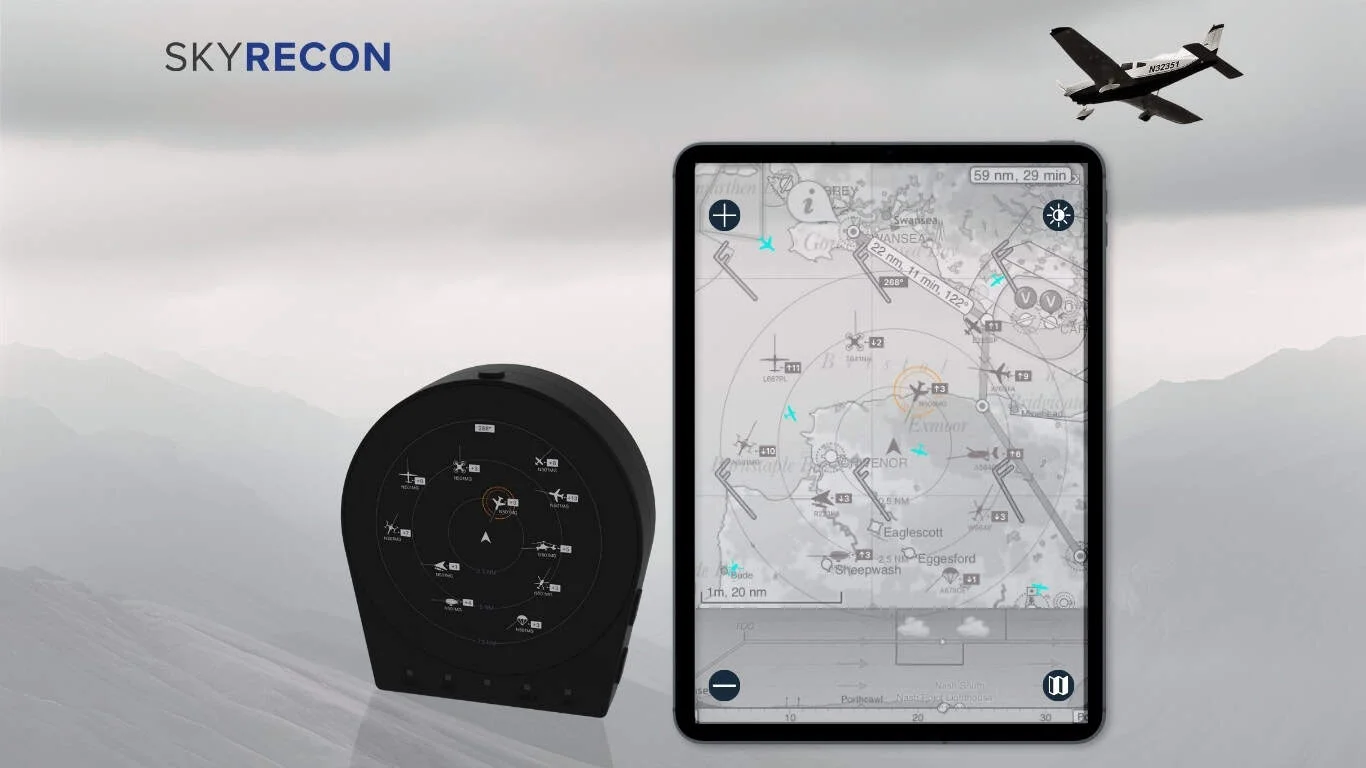
SkyRecon is a key piece of the connected cockpit puzzle. It delivers continuous traffic data to a dedicated, cockpit-ready display, combining real-time ADS-B signals with supplemental data from SafeSky. Pilots maintain awareness without toggling between screens or relying solely on panel avionics.
For more on this evolving landscape, read our full post: The Connected Cockpit: What Pilots Need to Know.
Top Flight Navigation Apps for Pilots
Flight planning and in-flight navigation have been transformed by mobile apps that simplify route creation, airspace management, and mid-flight adjustments. Two stand out for GA pilots.
SkyDemon: The Go-To App for European Pilots
SkyDemon is a favourite across Europe for good reason. Its drag-and-drop route creation makes planning intuitive, and dynamic NOTAM and airspace warnings keep flights compliant. Pilots can download charts for multiple countries, layer in-flight weather overlays, and review terrain awareness and runway data at a glance. For VFR flying in European airspace, it is hard to beat.
ForeFlight: The Pilot's Complete Flight Bag
ForeFlight brings professional-grade capabilities to GA. Advanced weather briefings, performance calculations, chart overlays, and a moving map cover both VFR and IFR operations. Fuel planning, weight and balance tools, and connectivity with compatible avionics round out a package that many pilots consider their single most important flight tool.
How SkyRecon Complements These Apps
SkyDemon and ForeFlight excel at navigation and planning, but neither provides a dedicated traffic display. SkyRecon fills that gap by showing real-time traffic on its own screen, freeing your tablet for route management and reducing cockpit clutter. With SkyRecon continuously monitoring traffic, pilots can focus on navigating without switching between screens. For a deeper look at how apps and SkyRecon pair together, see our post on integrating portable ADS-B receivers with flight apps.
For a detailed app comparison, check out: Top Flight Navigation Apps for Pilots.
Why Real-Time Data Beats Offline Systems
In aviation, conditions change minute by minute. Offline systems that rely on pre-downloaded data can only tell part of the story. Real-time traffic data keeps pilots updated on the most current airspace picture.
Drawbacks of Offline Systems
Static information becomes outdated fast. A traffic snapshot from five minutes ago may show an aircraft that has already landed or missed one that just departed. Offline data also tends to cover only aircraft broadcasting ADS-B Out, leaving gaps where compliance is inconsistent. The result is higher workload: pilots compensate with more radio calls and more visual scanning.
The Power of Real-Time Data
Real-time feeds show aircraft entering and exiting your airspace as it happens. Platforms like SafeSky aggregate data from multiple sources, including pilot-reported positions, broadening coverage well beyond ADS-B Out alone. In busy airspace or near non-towered airports, that continuous update cycle keeps pilots ahead of evolving traffic situations instead of reacting after the fact.
SkyRecon's Hybrid Approach
SkyRecon combines direct ADS-B signal reception with SafeSky's supplemental data feed, giving pilots comprehensive coverage that offline systems cannot match. It displays this information on a dedicated screen, so there is no need to juggle devices.
Discover why continuous data is essential in our full article: Why Real-Time Data Beats Offline Systems for Air Traffic Awareness.
Portable ADS-B Receivers: Filling the Traffic-Awareness Gap
Not every pilot has access to integrated panel avionics, but that should not limit traffic awareness. Portable ADS-B receivers bring real-time data into the cockpit without costly installations.
What Is a Portable ADS-B Receiver?
A portable ADS-B receiver is a compact, self-contained device that captures Automatic Dependent Surveillance-Broadcast (ADS-B) signals from nearby aircraft. These signals carry position, altitude, heading, and speed data, allowing pilots to visualise surrounding traffic in real time.
Unlike built-in transponders that broadcast your aircraft's position (ADS-B Out), portable receivers are designed for collecting and displaying data (ADS-B In). They help pilots stay aware of other aircraft in the vicinity, regardless of visual range, serving as a practical tool for reducing midair conflict risk and supporting better decisions in dynamic airspace.
Key Benefits of Portable ADS-B Receivers
Portability is the obvious advantage: move the device between aircraft in seconds. But the safety benefits go deeper. At non-towered airports, a portable receiver lets you visualise traffic in the pattern, catching aircraft you might not hear on the radio. In unfamiliar airspace, it surfaces traffic you might otherwise miss entirely. For pilots who fly different aircraft or rent regularly, a portable receiver provides consistent traffic awareness regardless of what is installed on the panel.
What to Look for in a Device
The most useful portable receivers share a few traits: a built-in display so you are not tied to a tablet, real-time traffic reception with frequent refresh rates, supplemental data integration for broader coverage, plug-and-play setup, and clear visual differentiation between direct ADS-B data and supplemented feeds. For a detailed buyer's checklist, see our guide on what to look for in a portable ADS-B receiver in 2026.
Why SkyRecon Stands Out
SkyRecon offers a bright, cockpit-ready display with real-time ADS-B reception and SafeSky supplemental data integration. It is portable, intuitive, and requires no complicated installation.
For more buying advice, read our post: Guide to Portable ADS-B Receivers: Enhancing Pilot Safety & Awareness.
The Role of Supplemental Traffic Data
Relying solely on ADS-B Out signals is not enough. In European airspace, compliance varies widely: gliders, ultralights, and balloons often carry no ADS-B transponder at all. Supplemental traffic data bridges that gap by aggregating positions from FLARM, pilot-reported apps, and other feeds.
SkyRecon's integration with SafeSky ensures pilots see traffic that ADS-B alone would miss, providing a clear advantage over devices limited to a single data source. Pilots can identify potential conflicts earlier and adjust their flight paths with confidence, even in areas where traditional monitoring falls short. This multi-source approach is central to the broader electronic conspicuity movement across European GA.
How the Right Tools Reduce Cockpit Workload
Managing navigation, communication, and safety simultaneously can overwhelm even experienced pilots. The right tools simplify this by offloading specific tasks to dedicated devices.
A visual traffic display eliminates the need to build a mental picture from radio calls alone. Alert and highlighting features let pilots prioritise threats at a glance. Portable devices that work out of the box remove setup complexity and the need to constantly monitor multiple apps.
SkyRecon's standalone screen and hybrid data integration let pilots maintain awareness without toggling between devices. The result: less distraction, less fatigue, and better decision-making during high-workload phases like departures, arrivals, and airspace transitions.
Pilot Confidence and Decision-Making
Confidence in the cockpit is built on three things: preparation, situational awareness, and access to the right information at the right time. Pilots who can see real-time traffic, receive dynamic airspace alerts, and reference intuitive navigation tools make better decisions under pressure and adapt more quickly when plans change.
Building Confidence in Complex Environments
Flying in congested airspace, near busy recreational areas, or across international borders with varying regulations introduces uncertainty. Clear, current information reduces that uncertainty. Tools like SkyRecon, paired with trusted navigation apps and continuous data feeds, give pilots the confidence to manage complexity without being overwhelmed.
Proactive Decisions, Not Reactive Ones
The best flights are the ones where the pilot anticipates challenges rather than reacts to them. Real-time data, smart alerts, and visual traffic displays allow pilots to adjust altitude, reroute, or extend spacing before a situation escalates. That proactive mindset improves both efficiency and safety.
Training Benefits
Modern flight safety tools also benefit training environments. Instructors and students gain from visual traffic and airspace displays during lessons, reinforcing good situational awareness habits from the earliest stages of a pilot's education.
By combining tools like SkyRecon with smart cockpit resources, pilots at every experience level can make more informed decisions and build lasting confidence.
Building a Smarter, Safer Cockpit
As more pilots embrace connected technologies, the cockpit becomes a data-rich environment that supports smarter decisions and proactive flying.
Situational awareness improves when real-time traffic and navigation data work together. Workload drops when dedicated devices handle specific tasks. And portability means any cockpit, from a 1970s Piper Cherokee to a new Cirrus SR22, can benefit.
SkyRecon's Role in Modern Aviation
SkyRecon is more than a portable receiver. It is a traffic awareness companion that empowers pilots to fly smarter and safer. SkyRecon integrates with SkyDemon, ForeFlight, and other navigation tools, providing the missing piece for full traffic visibility.
Future Trends in Connected Cockpit Technology
The aviation industry continues to innovate, and several trends are shaping the next generation of cockpit tools. AI-powered flight data interpretation promises smarter alerts and reduced information overload. Crowdsourced data is becoming a standard layer for airspace monitoring, especially in Europe. And the line between portable devices and panel avionics is blurring, with seamless integration becoming the expectation rather than the exception.
SkyRecon is positioned to grow with these trends, continuously updating its capabilities to ensure pilots have the most complete picture of their airspace.
Equip Yourself for the Connected Future
The GA cockpit is changing fast. Pilots who combine smart navigation apps, real-time data feeds, and portable traffic awareness tools are better prepared for today's airspace and tomorrow's. SkyRecon sits at the centre of that connected ecosystem, delivering real-time, comprehensive traffic awareness on a dedicated display with no complex installation or device juggling required.
If you fly in complex airspace, unfamiliar regions, or busy training zones, a dedicated traffic awareness device is no longer a nice-to-have. Explore SkyRecon and see how it fits into your cockpit setup.