You do not need a glass cockpit to have good traffic awareness. A portable ADS-B receiver fits in a flight bag, works in any aircraft, and delivers real-time traffic data that panel-mounted avionics costing ten times more struggle to match in coverage. For GA pilots flying everything from rented Cessna 152s to personal RVs, portable ADS-B receiver safety has become a practical priority rather than an upgrade to think about later.
This guide covers what portable ADS-B receivers are, how they enhance pilot safety awareness, and what features matter when choosing a device.
What Is a Portable ADS-B Receiver?
If you are new to ADS-B technology, start with our primer on what ADS-B is and why it matters for private pilots. A portable ADS-B receiver is a compact, standalone device that picks up Automatic Dependent Surveillance-Broadcast (ADS-B) signals from nearby aircraft. It lets pilots visualise traffic data in real time: positions, altitudes, and velocities of surrounding aircraft.
Unlike built-in transponders that broadcast your position (ADS-B Out), portable receivers focus on collecting data (ADS-B In), helping pilots stay aware of traffic in the vicinity. Not sure about the distinction? Our post on the difference between ADS-B receivers and transponders explains it in detail.
Why Portable ADS-B Receivers Matter for Pilot Safety
Enhanced Traffic Awareness
A portable receiver acts as an extra set of eyes. By visualising traffic data on a dedicated screen, pilots detect potential conflicts earlier and make safer decisions. At a busy circuit or training area, that early warning can be the difference between a comfortable separation and a close call.
Flexibility Across Aircraft
Pilots who rent or fly multiple aircraft cannot rely on whatever avionics happen to be installed. A portable device travels with you. Drop it on the glareshield, power it on, and you have consistent traffic awareness in a 1975 Cherokee or a 2024 Cirrus.
Improved Safety at Non-Towered Airports
Non-towered airports present unique challenges: not every pilot makes radio calls, and some aircraft operate with minimal electronics. A portable ADS-B receiver gives you a clear picture of traffic in the pattern, including aircraft you might not hear on frequency.
Confidence in Congested Airspace
Busy airspace, flight training zones, and fly-in events become more manageable when you can see traffic in real time and react proactively. Rather than building a mental picture from radio calls alone, you have a visual display that updates continuously.
Key Features to Look for in a Portable ADS-B Receiver
Built-In Display
Many portable receivers require pairing with a tablet or phone to display traffic. This works, but it ties up your EFB screen and adds cockpit complexity. A device with its own built-in, sunlight-readable display lets you check traffic at a glance without interrupting your navigation workflow. For a full breakdown of selection criteria, see our 2026 buyer's guide to portable ADS-B receivers.
Real-Time Traffic Reception
The receiver should pick up live ADS-B signals with frequent updates and display accurate, dynamic information. Refresh rate matters: a slow update cycle defeats the purpose of real-time awareness.
Supplemental Traffic Data
In European airspace, where not all aircraft transmit ADS-B Out, supplemental data integration is critical. Devices that pull in additional sources like FLARM and pilot-reported positions through platforms such as SafeSky fill the gaps that ADS-B alone leaves open. This multi-source approach is at the heart of the electronic conspicuity movement in GA.
Portability and Ease of Use
The best portable receivers are compact, lightweight, and require minimal setup. Power on, place in the cockpit, and go. No installation, no wiring, no downtime.
Data Clarity and Smart Highlighting
Pilots need to know which traffic targets come from direct ADS-B signals and which are supplemented from other sources. Devices that visually distinguish these categories help build trust in the display and support better decision-making.
How SkyRecon Goes Beyond Standard Receivers
SkyRecon was built to address the limitations of basic portable ADS-B receivers. It delivers portable avionics GA pilots can depend on.
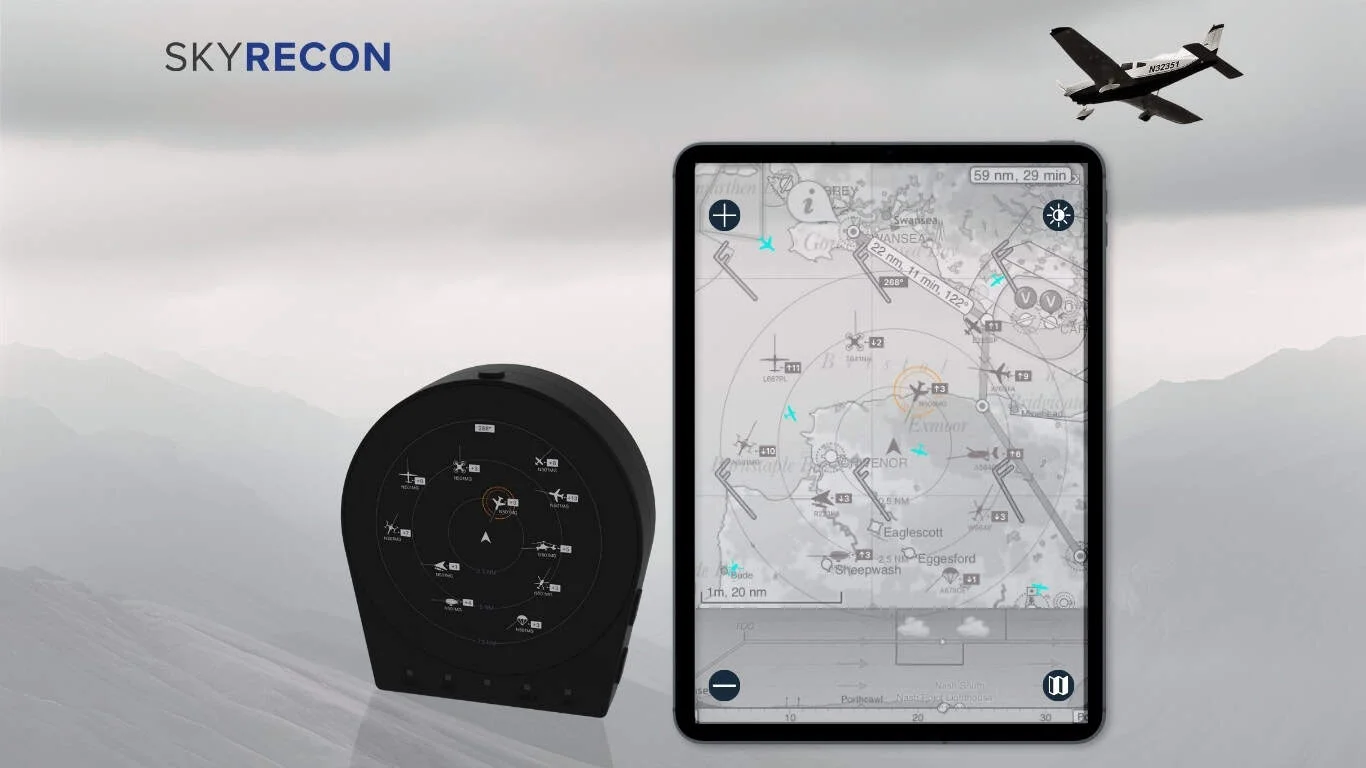
Standalone Built-In Screen. SkyRecon's dedicated 3.5-inch round display shows real-time traffic relative to your aircraft. No iPad required. It is fully self-contained.
Real-Time ADS-B Reception. Live ADS-B signals let pilots visualise traffic movements and maintain clear ADS-B situational awareness at all times.
Supplemental Data Integration. Through SafeSky, SkyRecon displays traffic from aircraft that may not transmit ADS-B Out: gliders, ultralights, and pilot-reported positions. This gives broader coverage than receivers limited to a single data source.
Smart Traffic Highlighting. SkyRecon differentiates between live ADS-B signals and supplemented data, giving pilots confidence in the accuracy and source of each displayed target.
Portability and Simplicity. Plug-and-play design, no installation, no configuration. Ideal for pilots who rent or switch between aircraft regularly. For pilots who also want their receiver to talk to their EFB, our guide on integrating portable ADS-B receivers with flight apps covers the setup.
Every Cockpit Benefits from Portable Traffic Awareness
Even pilots flying well-equipped aircraft gain value from a portable ADS-B receiver as a backup or secondary traffic display. Flight instructors bring them to student flights for an extra layer of awareness. Cross-country pilots rely on them in unfamiliar airspace. Weekend flyers gain confidence operating near busy or uncontrolled airports.
For GA pilots at any level, a portable ADS-B receiver is no longer optional equipment. It is a core safety tool. SkyRecon takes that concept further with its standalone display, supplemental data, and hybrid traffic model.
Ready to build a safer cockpit? Read our parent guide on Modern Flight Safety Tools for the Connected Cockpit, and explore SkyRecon to find the right fit for your flying.