
A decade ago, a typical GA pre-flight meant printing NOTAMs, folding a chart, and tuning ATIS on the ground. Today, a pilot at Gloucester or Elstree can pull live traffic, weather overlays, and airspace alerts onto a tablet before the engine is running. The connected cockpit has moved from airline-grade luxury to an everyday reality for private pilots, and understanding what it offers is now a core part of flying safely.
This shift matters beyond convenience. For GA pilots, the digital cockpit general aviation revolution is about safety, situational awareness, and making better decisions with less effort. Here is what you need to know.
What Is the Connected Cockpit?
The connected cockpit refers to the integration of digital systems and live data feeds that provide pilots with real-time situational awareness. Instead of relying solely on ATIS recordings, tower transmissions, and printed charts, pilots access dynamic, constantly updated information that supports decisions before and during flight. Key components include:
- ADS-B In and Out for traffic and position awareness
- Real-time weather data feeds
- GPS and advanced navigation tools
- Tablet-based EFBs (Electronic Flight Bags)
- Supplemental data sources and cloud-based updates
- Integration with third-party traffic and airspace services
The result is a cockpit where information flows continuously rather than arriving in static snapshots.
Why the Connected Cockpit Matters
Flying has always been about freedom and independence, but freedom in the air carries responsibility. Part of that responsibility is staying informed about rapidly changing conditions and surrounding traffic. A connected cockpit helps pilots in several practical ways.
Real-time traffic, weather, and airspace alerts displayed on screen allow proactive hazard avoidance instead of last-second reactions. Data-driven decision-making improves route choices, diversions, and in-flight adjustments. In congested airspace, visualising traffic on a dedicated display or tablet helps manage crowded skies with greater confidence. And automated updates reduce the mental strain of gathering and interpreting multiple pieces of information, lowering overall cockpit workload.
The Challenges of Partial Connectivity
Panel-integrated avionics can deliver many of these benefits, but not every aircraft has them. Upgrading legacy aircraft with advanced avionics is expensive, and even some newer planes lack supplemental traffic display features. Pilots who rent or fly multiple aircraft may not have consistent access to panel-based solutions.
Even advanced built-in systems have blind spots. ADS-B data only shows traffic equipped with ADS-B Out. In regions like Europe, where compliance is inconsistent, this leaves significant gaps. Some aircraft rely on offline data alone, which raises the question of why real-time data beats offline systems for air traffic awareness.
Portable Devices: The Flexible Solution
This is where portable connected cockpit devices fill the gap. Devices like SkyRecon provide a dynamic, comprehensive traffic picture without expensive installations. They deliver the benefits of connectivity and advanced data aggregation while remaining flexible, portable, and ready to use in any cockpit. If you are evaluating options, our guide on what to look for in a portable traffic awareness device covers the key criteria.
How SkyRecon Fits Into the Connected Cockpit
SkyRecon was designed with cockpit data integration in mind. It goes beyond basic ADS-B reception to deliver a complete portable traffic awareness solution.
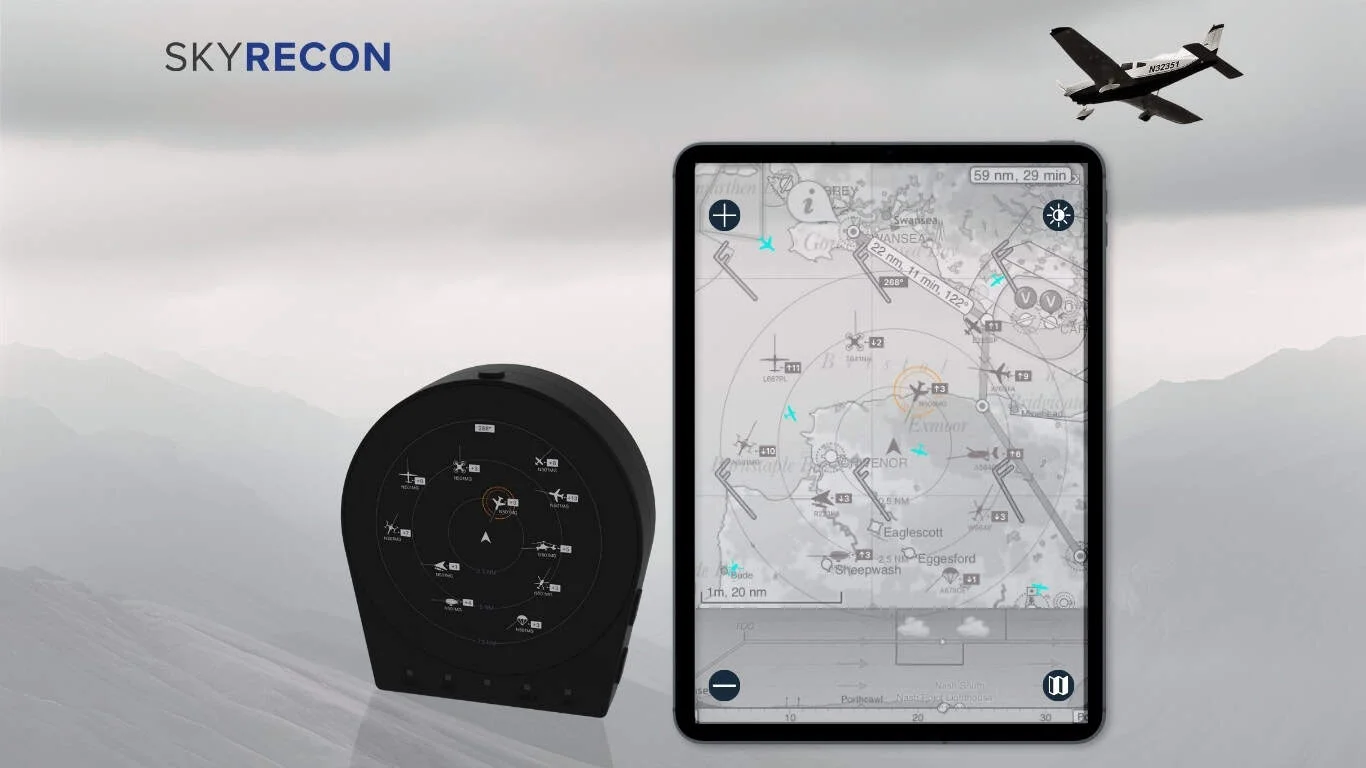
ADS-B and Beyond. SkyRecon receives real-time ADS-B In traffic data, showing aircraft broadcasting ADS-B Out in your vicinity. What sets it apart is SafeSky integration, which aggregates traffic from FLARM, pilot-reported positions, and other feeds. This helps fill the gaps where radar and ADS-B coverage fall short, particularly in European airspace. This multi-source approach aligns with the broader electronic conspicuity movement across GA.
Dedicated Display for Instant Awareness. Rather than relying on a tablet or app alone, SkyRecon features a bright 3.5-inch round LCD screen. Pilots get a quick-glance view of nearby traffic, altitude separations, and relative positions without device juggling in flight. For pilots interested in how receivers pair with EFBs, see our guide on integrating portable ADS-B receivers with flight apps.
Intelligent Traffic Highlighting. SkyRecon lets pilots toggle highlighting that differentiates direct ADS-B data from aggregated supplemental traffic. This transparency helps pilots understand data reliability and timing, supporting more confident decisions.
Cloud Connectivity and Continuous Updates. With Wi-Fi connectivity, SkyRecon continually receives updates from SafeSky and other cloud-based platforms. Pilots flying in areas with varying compliance or multiple traffic sources can trust they are seeing the most current information available.
Portability and Easy Setup. For pilots who rent aircraft or fly multiple planes, SkyRecon's portability is a genuine advantage. No installation required. Power on, place in the cockpit, and you have instant situational awareness.
Why Devices Like SkyRecon Are Now Essential
The connected cockpit is becoming the standard for safe and confident flying. Pilots are expected to be more aware of traffic, airspace changes, and dynamic conditions than ever before. Relying solely on visual observation and ATC advisories is no longer sufficient in busy or complex airspace.
SkyRecon offers a practical, portable way to embrace the connected cockpit without the expense or limitations of permanent avionics upgrades. It empowers pilots to fly with greater awareness and less guesswork.
Take the Next Step
The connected cockpit represents a fundamental shift in how pilots manage information and maintain situational awareness. For weekend flyers, instructors, and cross-country pilots navigating unfamiliar airspace, real-time traffic data is becoming essential rather than optional.
SkyRecon makes this level of awareness accessible to all pilots, not just those flying state-of-the-art aircraft. With integrated ADS-B, supplemental traffic data, cloud connectivity, and a dedicated cockpit display, it is built for the way GA pilots actually fly. Learn more about the full toolkit in our parent guide: Modern Flight Safety Tools for the Connected Cockpit, and explore SkyRecon to see how it fits your cockpit.