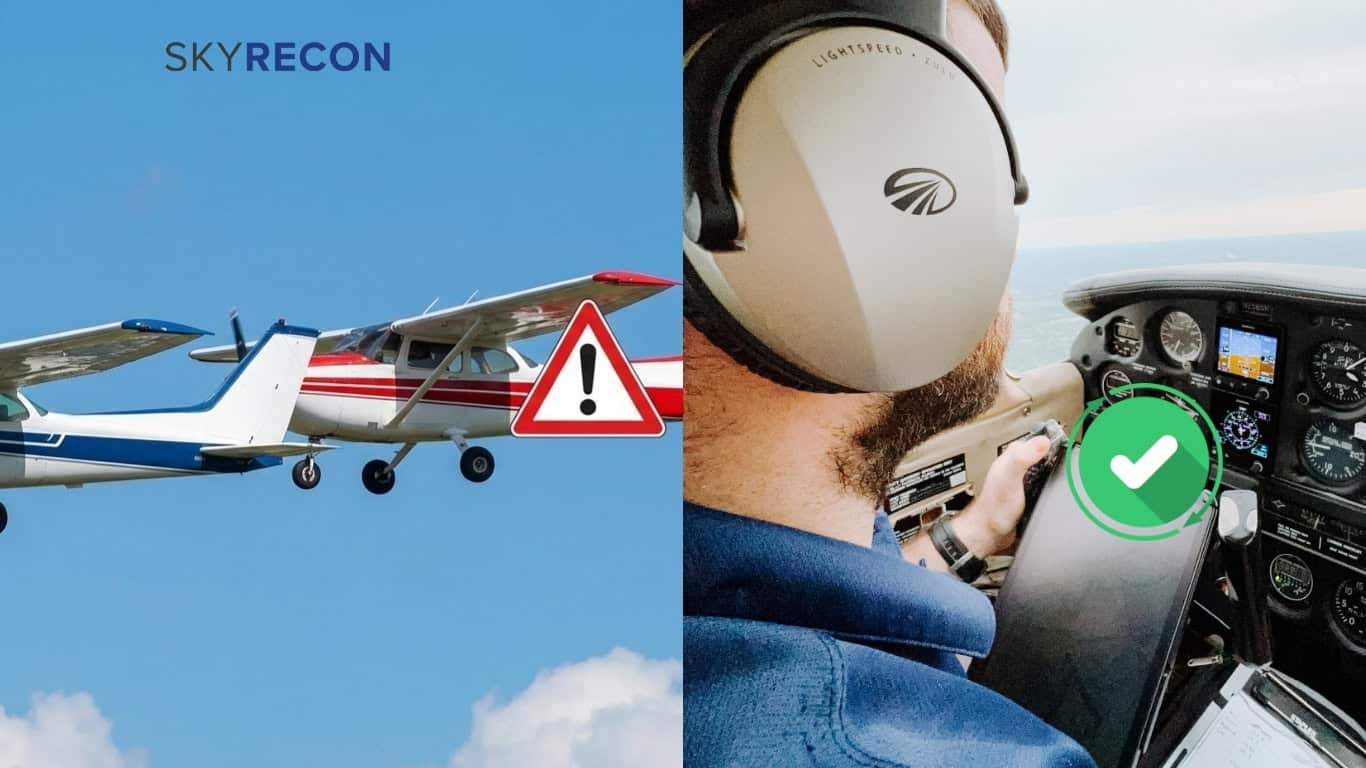
You fly a club Cessna 172 on Saturdays, rent a PA-28 for cross-countries, and occasionally get a seat in a friend's Grumman Tiger. None of the three has ADS-B In on the panel. Your traffic awareness depends entirely on your eyes, ATC, and whoever happens to be on frequency. A portable traffic awareness device changes that equation entirely, bringing real-time traffic data into any cockpit without touching a single wire.
But not all portable devices are equal. The feature set, display quality, and data sources vary significantly between products. Here is what to prioritise when choosing the right one.
ADS-B In Capability
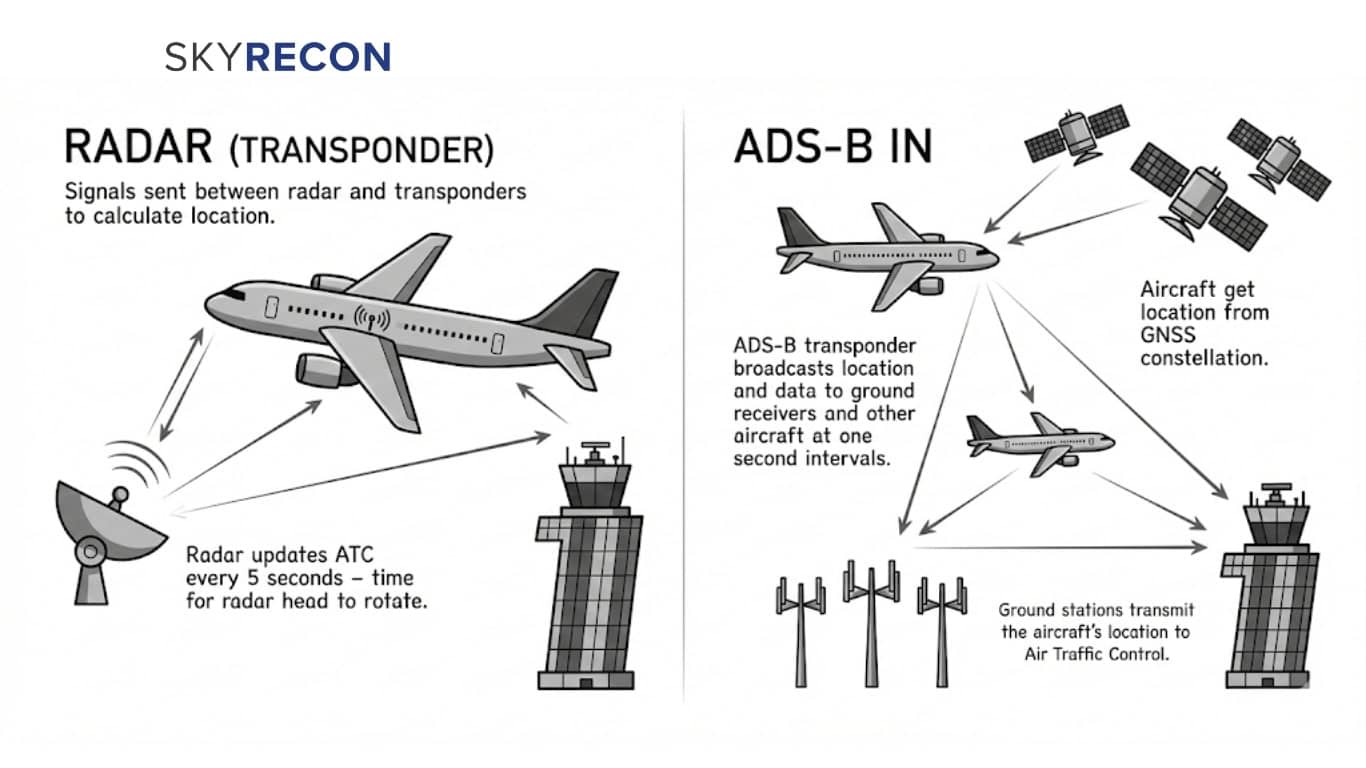
The core function of any portable traffic awareness device is receiving ADS-B In data. The device should pick up 1090 MHz signals (the standard in Europe and internationally) and display nearby aircraft relative to your position. Check that it supports the latest ADS-B protocols and updates traffic positions at least once per second.
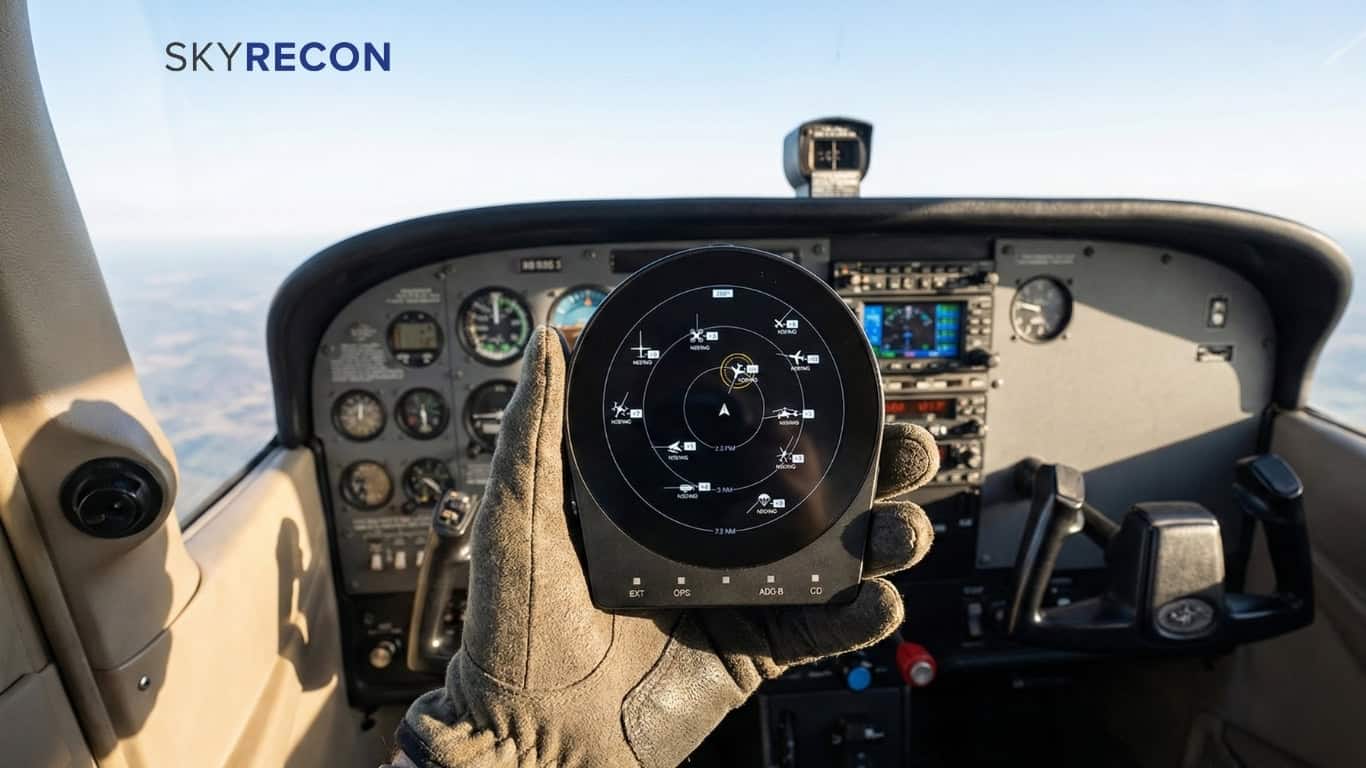
SkyRecon's approach. SkyRecon receives ADS-B In with robust signal processing and displays real-time traffic on a dedicated screen with clear visual cues showing bearing, distance, and altitude separation.
Supplemental Traffic Data Integration
ADS-B data has real limits, particularly in European airspace where many aircraft carry no ADS-B Out transponder. A device worth buying will incorporate supplemental data from FLARM, MLAT, or crowd-sourced platforms like SafeSky.
SkyRecon's approach. SafeSky integration gives SkyRecon visibility into gliders, ultralights, microlights, and app-reporting pilots that a pure ADS-B receiver would miss. Read more about how supplemental traffic data enhances airspace awareness and why this matters for understanding the difference between receivers and transponders.
Clear, Built-In Display
Many portable ADS-B receivers require connection to a tablet or phone running a third-party app. That adds complexity: Bluetooth pairing, app updates, screen brightness in sunlight, battery drain on two devices instead of one. A purpose-built display eliminates these dependencies.
SkyRecon's approach. The bright, high-resolution 3.5-inch round LCD is designed for cockpit conditions. Traffic is visible at a glance without fumbling with a mobile device or managing app connections mid-flight.
Real-Time Alerts and Traffic Highlighting
Showing traffic is the baseline. A good device also helps you prioritise what matters. Look for features that flag potential conflicts, highlight closing traffic, and distinguish between high-confidence direct ADS-B signals and supplemental data that may carry slight delays.
SkyRecon's approach. The "Highlight SafeSky Traffic" toggle lets pilots instantly see which targets come from live transponder signals and which are aggregated from supplemental sources. That transparency supports sharper decision-making in busy traffic environments.
Portability and Easy Setup
If the device takes significant effort to set up, it will not get used consistently. The best portable devices require no installation, power on quickly, and are small enough to position securely in any cockpit layout.
SkyRecon's approach. Fully portable with no installation required. Place it on the glareshield or a mount, power on, and you have immediate traffic awareness. It moves between aircraft in seconds, which makes it practical for renters, instructors, and pilots who fly different types regularly.
Reliable Power and Connectivity
Battery life, charging options, and stable data connections are easy to overlook but matter on a three-hour cross-country. Look for devices that offer both internal battery and external power options, and ensure the data connection to supplemental feeds is stable in flight.
SkyRecon's approach. SkyRecon supports extended use with internal power and easy charging. Its reliable Wi-Fi connection and optional SIM connectivity ensure continuous receipt of SafeSky data even in areas with limited ground coverage.
Future-Proof Updates
Aviation technology moves quickly. Electronic conspicuity requirements are evolving across Europe, new data sources are emerging, and regulatory frameworks are shifting. Choose a device from a manufacturer committed to ongoing firmware and feature updates.
SkyRecon's approach. Regular firmware updates ensure SkyRecon keeps pace with new data feeds, protocol changes, and feature improvements. Pilots benefit from continuous development without needing to buy new hardware. Understanding why electronic conspicuity matters for every GA pilot helps explain why a future-proof device is a smart investment.
Why SkyRecon is the Smart Choice
SkyRecon is a fully integrated traffic awareness solution: real-time ADS-B In, supplemental data via SafeSky, a dedicated display, and genuine portability. It is designed for the way GA pilots actually fly: multiple aircraft, minimal setup time, and conditions where a tablet is not always practical.
In complex European airspace, at a non-towered field, or simply wanting a more complete traffic picture than your panel provides, SkyRecon delivers the awareness advantage that matters.
For a more detailed comparison of portable receiver options, see our 2026 portable ADS-B receiver buying guide. And for the full overview of traffic awareness technology, read our Complete Guide to In-Flight Traffic Awareness for General Aviation Pilots.