An instructor and student were practising circuits at a non-towered field in the south of England. On downwind, they heard no other calls on the frequency. The student turned base, and a glider appeared from below, climbing through their altitude in a thermal less than half a mile ahead. No transponder, no radio call, no ADS-B signal. The only warning was the instructor's eyes.
Situational awareness gaps like this one do not require negligence. They form naturally during high-workload phases, in unfamiliar environments, or when the traffic around you simply is not broadcasting. The good news is that most of these gaps are predictable, and modern tools can help close them.
Here are five of the most common situational awareness gaps in general aviation and what pilots can do about each one.
Limited Traffic Visibility
Even attentive pilots cannot always rely on visual scanning alone. Wing roots, sun glare, haze, and the sheer difficulty of spotting a small aircraft against a cluttered ground background all conspire to hide traffic. ATC communications help, but controllers cannot call out every aircraft, and radar coverage has altitude and distance limits.
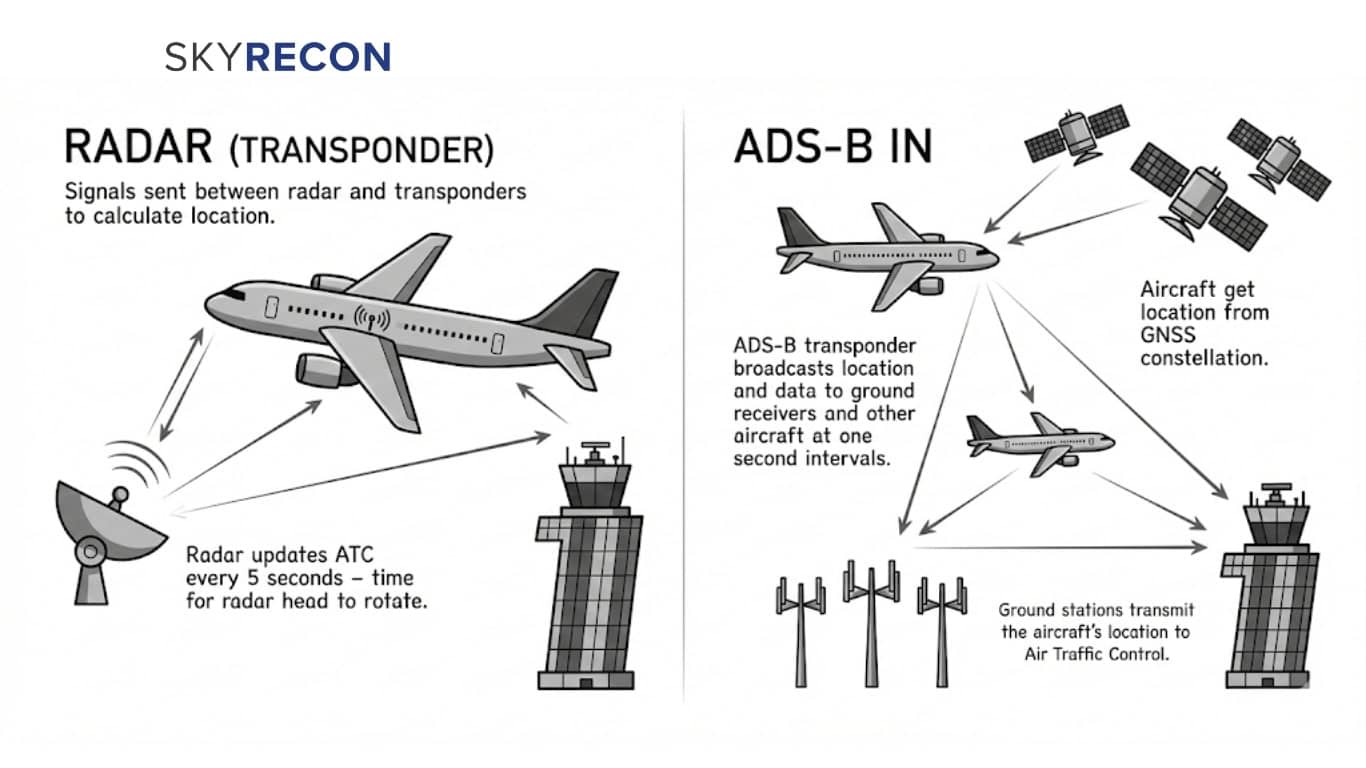
The visibility problem is compounded in regions where many aircraft fly without ADS-B Out or transponders. A Mode S transponder makes you visible to ATC radar, but if neither pilot has ADS-B In, neither can see the other electronically.
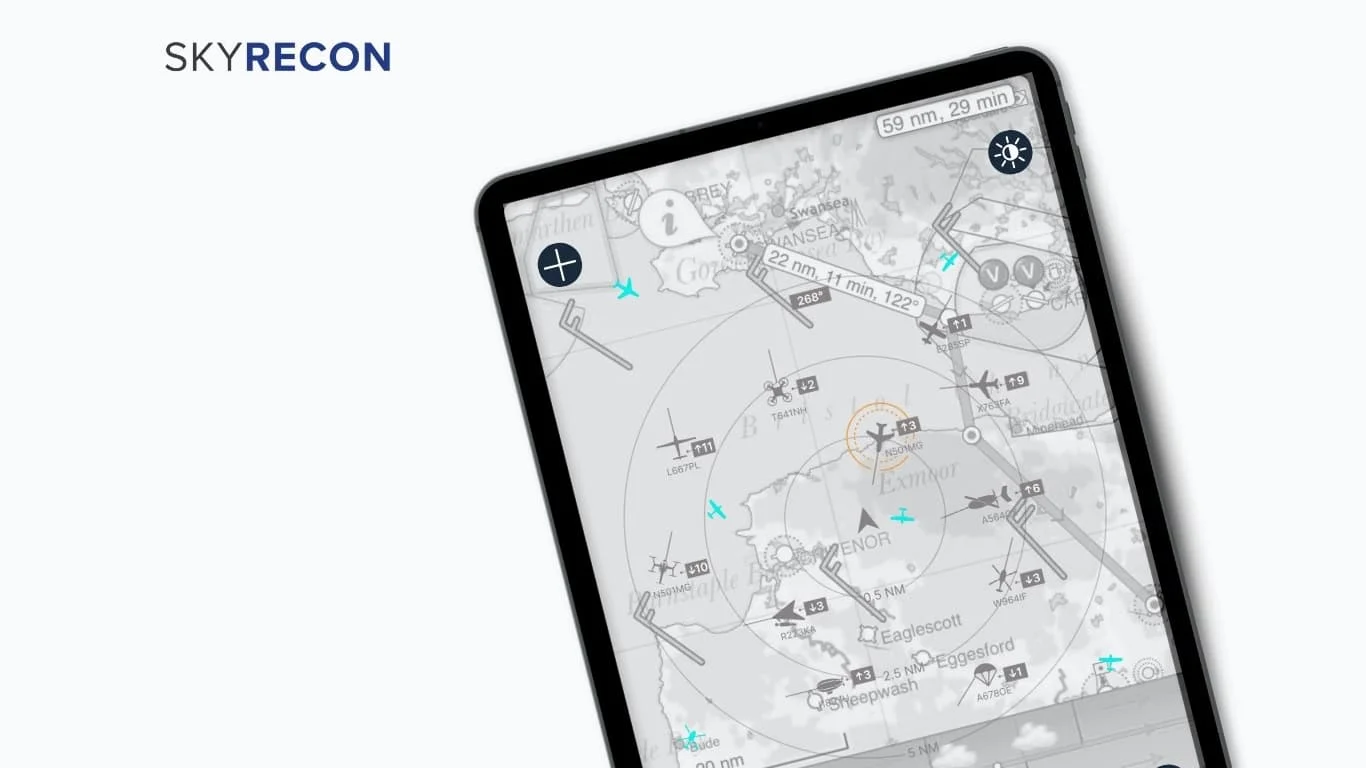
How SkyRecon helps. SkyRecon displays real-time traffic using ADS-B In signals combined with supplemental data from SafeSky. Learn more about how supplemental traffic data enhances airspace awareness. SafeSky aggregates FLARM positions, pilot-reported locations, and crowd-sourced feeds, giving pilots visibility into traffic that no ADS-B-only receiver would show. The display presents relative position and altitude, so potential conflicts are identified before they become close calls.
Overlooking Non-Towered Airport Traffic
Operating at non-towered airports demands heightened vigilance. Pilots must self-announce positions and rely on visual scanning combined with CTAF radio calls. The problem is that not every aircraft communicates consistently. Some ultralight and glider pilots carry no radio at all. Others transmit on the wrong frequency or join the circuit without making calls.
The lack of sequencing authority means spacing depends entirely on each pilot's individual awareness, which creates risk whenever two or more aircraft have incomplete pictures of each other.
How SkyRecon helps. By receiving ADS-B signals and displaying SafeSky data, SkyRecon lets pilots visualise aircraft around non-towered airports regardless of whether those pilots are on frequency. Seeing a target on downwind that you never heard on the radio gives you time to adjust spacing, extend, or break off as needed.
Unawareness of Nearby Airspace Constraints
Airspace boundaries, Temporary Flight Restrictions, military exercise areas, and controlled zones near busy terminals can catch pilots off guard. This is especially true during long cross-country flights where the airspace structure changes every few minutes, or in congested areas of Europe where controlled zones sit close together.
Airspace incursions carry serious consequences: regulatory enforcement, safety risk, and in some cases, military interception. Yet they remain one of the most commonly reported GA incidents.
How SkyRecon helps. SkyRecon integrates airspace data and alert functions that warn pilots as they approach restricted or controlled areas. That warning gives time to adjust course before an incursion happens, complementing pre-flight planning and chart study. As European airspace evolves under electronic conspicuity initiatives, having a device that keeps pace with regulatory changes becomes increasingly important.
Delayed Reaction to Changing Weather
Weather can shift rapidly. A METAR from 30 minutes ago may no longer reflect the conditions ahead. Cumulonimbus development, sea fog rolling inland, or a front moving faster than forecast can all demand immediate route changes. When weather absorbs pilot attention, traffic scanning drops. Meanwhile, other aircraft may be diverting into the same area to avoid the same weather.
How SkyRecon helps. SkyRecon's comprehensive dashboard consolidates traffic and environmental data on a single screen, helping pilots maintain traffic awareness even when weather is demanding their attention. Combined with real-time traffic feeds, this ensures the full situational picture remains available without switching between multiple devices.
Task Saturation and Cockpit Distraction
Navigation, communication, aircraft control, checklist management, passenger comfort. When the workload stacks up, pilots lose bandwidth for the tasks that are not screaming for attention. Traffic scanning is frequently the casualty because it produces no immediate feedback until something goes wrong.
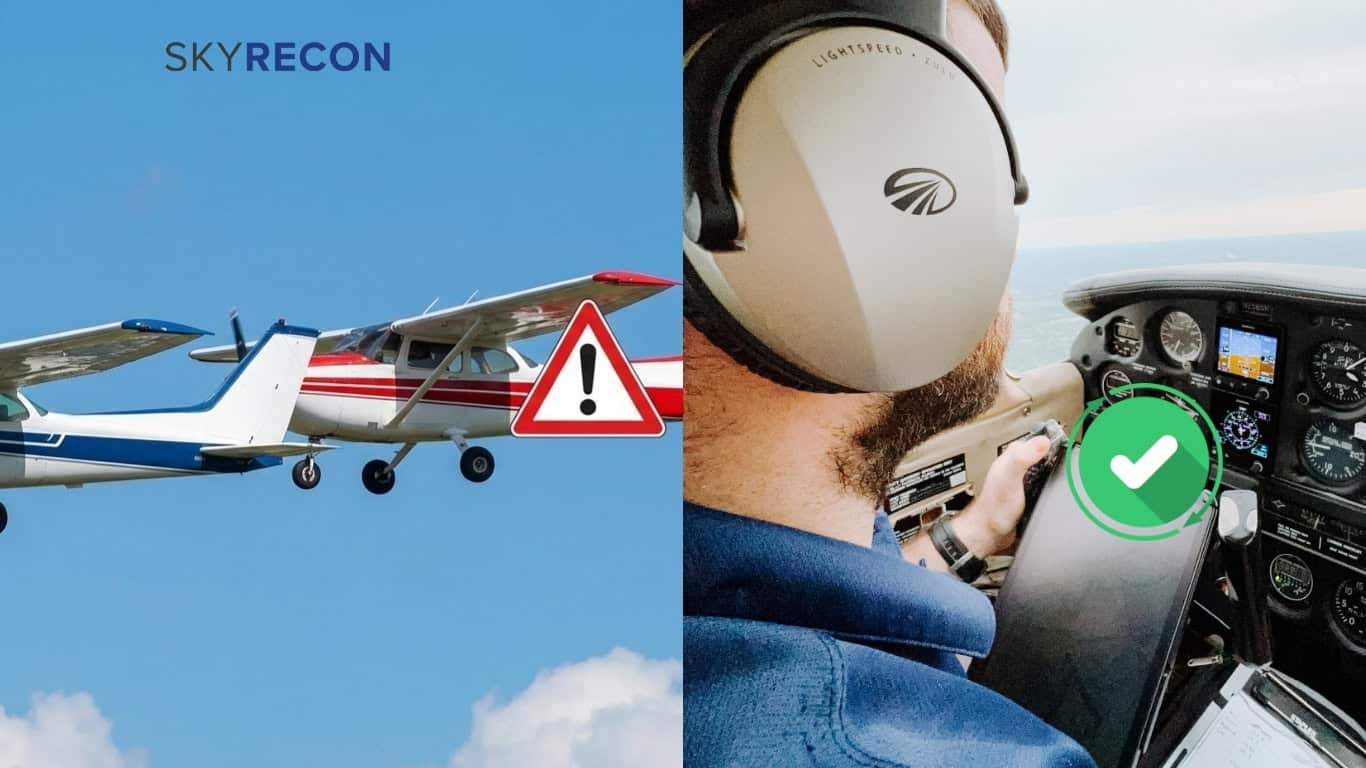
Fiddling with tablets, managing multiple apps, or referencing paper charts all increase distraction. Each additional device or information source competes for the same limited pool of attention.
How SkyRecon helps. SkyRecon reduces cockpit workload by consolidating real-time traffic data onto a single built-in screen. There is no tablet to manage, no app to keep connected, no Bluetooth pairing to troubleshoot mid-flight. The device is purpose-built for quick glances. Traffic information stays visible without interrupting other essential tasks, which helps pilots remain focused during the high-workload phases when awareness gaps are most likely to form. Understanding what electronic conspicuity means for GA safety provides additional context on why standalone, always-on traffic displays are becoming the standard for well-equipped GA cockpits.
Technology as a Second Set of Eyes
The cockpit is busier than it has ever been, and technology can act as a second set of eyes. Nothing replaces pilot skill and judgement, but tools like SkyRecon give pilots better access to critical information that once required multiple sources and constant monitoring.
SkyRecon's portable design works across different aircraft. Its built-in round LCD display presents traffic intuitively. And by combining real-time ADS-B In feeds with SafeSky data, it fills coverage gaps that traditional radar and even some panel-mounted avionics miss.
Awareness is never static. It requires ongoing attention, smart use of resources, and the right tools in the cockpit. For the complete picture on traffic awareness, read our Complete Guide to In-Flight Traffic Awareness for General Aviation Pilots.