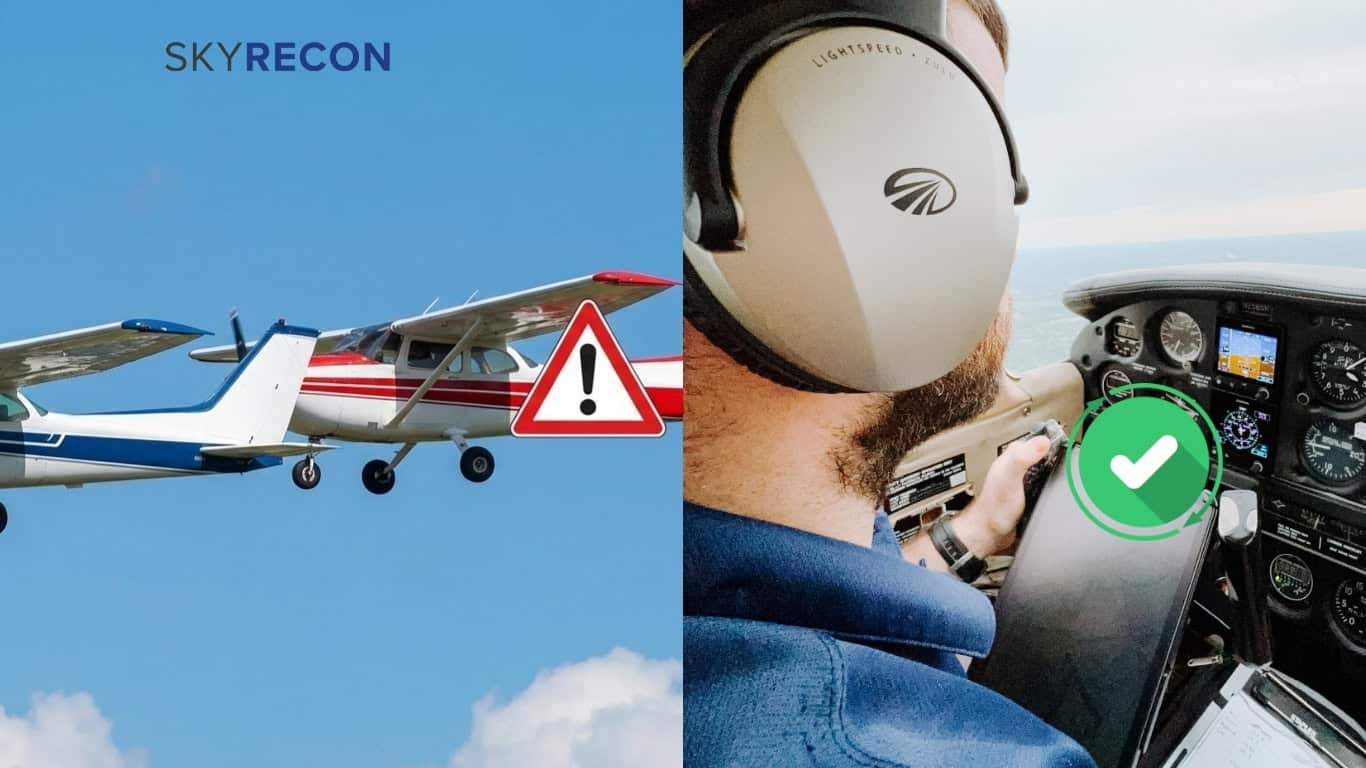
A Cessna 172 and a Piper Cherokee nearly merged on a TCAS display over the Cotswolds last summer. Neither pilot had seen the other until the last few seconds. Both were squawking, both were legal, and both were relying on see-and-avoid in Class G airspace. The incident never made the news, but it is exactly the kind of scenario that better in-flight traffic awareness could have prevented minutes earlier.
This guide covers what GA pilots need to know about traffic awareness: the technology behind it, the gaps that still catch experienced aviators off guard, and how portable tools like SkyRecon are changing the picture.
What is ADS-B and Why Does It Matter?
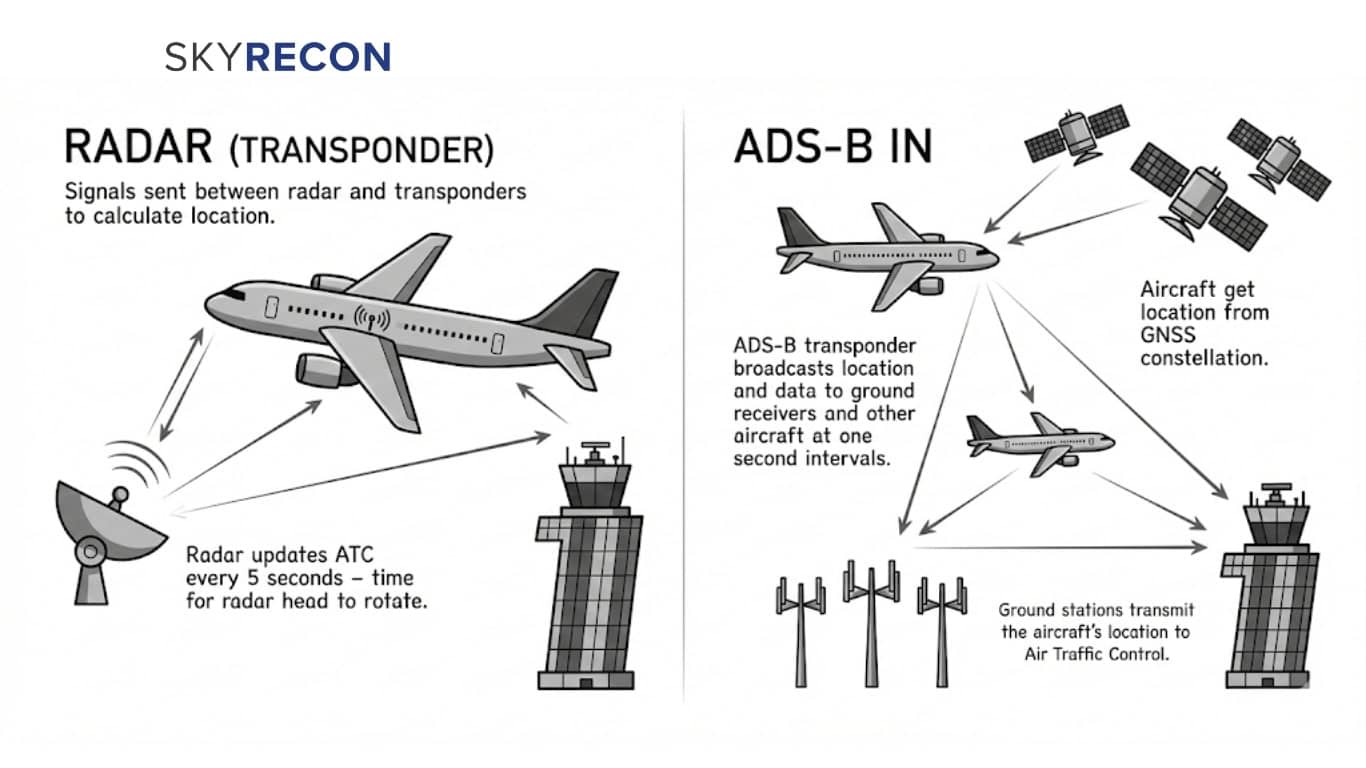
ADS-B (Automatic Dependent Surveillance-Broadcast) is the backbone of modern traffic awareness. Instead of relying solely on radar sweeps or pilot position reports, ADS-B-equipped aircraft determine their position via GNSS and broadcast it continuously. That broadcast includes altitude, groundspeed, heading, and aircraft identification.
ADS-B Out vs ADS-B In
ADS-B Out transmits your aircraft's position so ground stations and other aircraft can track you. In the US, ADS-B Out has been mandatory in most controlled airspace since January 2020. In Europe, the picture is more fragmented, with mandates varying by airspace class and aircraft type.
ADS-B In is the receiving side. It lets pilots see traffic data from nearby aircraft on a cockpit display. ADS-B In is not mandated anywhere, but it is arguably the more valuable half for GA pilots, because it gives you eyes on traffic that you might never spot visually.
How SkyRecon Fits In
Many aircraft broadcast ADS-B Out, yet plenty of GA cockpits still lack any way to receive and display that traffic. SkyRecon fills this gap with a portable receiver that shows real-time ADS-B traffic on a built-in 3.5-inch screen. It also pulls supplemental data from SafeSky, which means the traffic picture extends beyond ADS-B alone. For a deeper look at the technology, read our post on ADS-B and why it matters for private pilots.
Common Situational Awareness Gaps
Even experienced pilots develop blind spots. Recognising the most frequent awareness gaps is the first step to closing them.
Limited Traffic Visibility
Visual scanning and ATC traffic calls have real limits. Blind spots created by wing roots, sun glare, or cloud layers mean traffic can stay hidden until it is uncomfortably close. Aircraft without transponders or ADS-B Out are invisible to most systems entirely.
Non-Towered Airport Challenges
At non-towered fields, separation depends on self-announce calls and visual scanning. Not every pilot transmits on the correct CTAF frequency, and some aircraft carry no radio at all. The result is a traffic environment where assumptions can be dangerous.
Airspace Complexity
Evolving airspace restrictions, temporary danger areas, and overlapping zones near busy terminal areas make it easy to stray where you should not be. The cognitive load of managing boundaries while also watching for traffic creates real risk.
Rapidly Changing Weather
A sudden weather shift can absorb a pilot's attention entirely, pulling focus away from traffic monitoring at exactly the moment when other aircraft may be diverting into the same area.
Cockpit Task Saturation
Navigation, radio work, checklists, passenger management. When the workload spikes, traffic scanning is often the first task to slip. A dedicated traffic display that requires no pilot input can keep that awareness channel open.
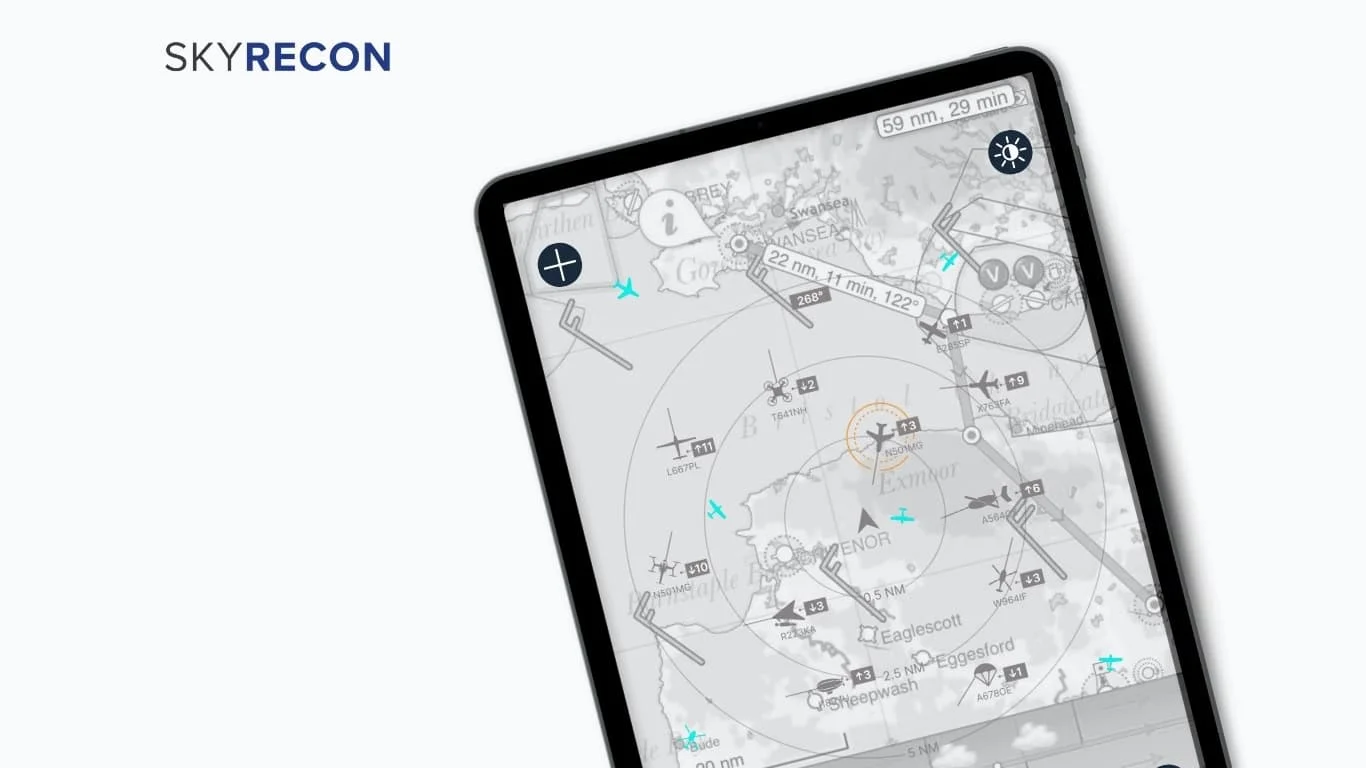
SkyRecon consolidates traffic data into a single cockpit display, showing both ADS-B and supplemental traffic from SafeSky. Pilots can reduce guesswork and maintain focus even during high-workload phases. Read the full breakdown of five common situational awareness gaps in general aviation.
ADS-B Receivers vs Transponders
Pilots new to ADS-B technology sometimes confuse receivers with transponders. The distinction matters because each serves a fundamentally different purpose.
ADS-B Transponders (Out)
A transponder broadcasts your aircraft's position so that ATC and other pilots can see you. It makes you visible to the system. Transponders are installed avionics, professionally fitted and certified.
ADS-B Receivers (In)
A receiver picks up broadcasts from other aircraft, letting you see traffic around you. Receivers can be portable, require no installation, and work independently of the aircraft's panel avionics.
SkyRecon's Role
SkyRecon is a portable ADS-B receiver with its own dedicated display and supplemental data integration. It shows traffic that transponder-based systems alone might miss, including non-ADS-B aircraft tracked through SafeSky. For the full comparison, see our guide to the difference between ADS-B receivers and transponders.
How Supplemental Traffic Data Fills the Gaps
ADS-B coverage is not universal. In Europe especially, many gliders, ultralights, and vintage aircraft fly without ADS-B Out. That leaves real blind spots for pilots relying on ADS-B In alone.
What Counts as Supplemental Data?
Supplemental traffic data comes from sources beyond ADS-B: FLARM (widely used among European glider and light aircraft communities), MLAT (multilateration from ground receiver networks), pilot-reported positions via mobile apps, and crowd-sourced platforms like SafeSky that aggregate all of these feeds.
Why It Matters
Access to supplemental data lets pilots detect potential conflicts sooner, fly with greater confidence in unfamiliar airspace, and lower cockpit workload by presenting traffic visually rather than relying entirely on radio calls and out-the-window scanning.
SkyRecon and SafeSky
By integrating SafeSky data, SkyRecon shows traffic that traditional ADS-B receivers miss. This is particularly valuable near glider fields, recreational flying areas, and in European airspace with mixed equipage. Read more in our post on how supplemental traffic data enhances airspace awareness.
Choosing a Portable Traffic Awareness Device
Pilots who rent aircraft or fly multiple types need a solution that moves with them. Portable traffic awareness devices provide powerful capability without permanent installation.
What to Prioritise
Built-in display. A device that works independently, without requiring a tablet or phone, keeps things simple. You want at-a-glance traffic information that does not depend on a separate app staying connected.
Real-time ADS-B reception. The device must show aircraft relative to your position with accurate, current data including altitude differences and closing speeds.
Supplemental data integration. Coverage gaps are unavoidable. A device that integrates SafeSky or similar services lets you see aircraft that are not broadcasting ADS-B Out.
Portability and simplicity. No installation, fast power-on, intuitive controls. If it takes longer to set up than to do your walk-around, it will stay in the flight bag.
Smart traffic highlighting. The ability to distinguish between live ADS-B signals and aggregated supplemental data helps you calibrate your response to each target.
SkyRecon meets all of these criteria with its standalone screen, real-time ADS-B data, SafeSky integration, and grab-and-go portability. For the detailed buying guide, see what to look for in a portable traffic awareness device.
Why In-Flight Traffic Awareness Matters More Than Ever
Airspace is growing busier and more diverse. Drones, ultralights, paragliders, commercial jets, and training aircraft all share the same sky. That mix makes continuous pilot traffic detection essential for every GA flight.
Pilots Who Rent or Fly Multiple Aircraft
SkyRecon's portability means you carry your traffic awareness from aircraft to aircraft. Even if the panel has no ADS-B In capability, you still get a real-time traffic picture without any installation or modification.
Flying in Unfamiliar Airspace
Crossing into a new region introduces unfamiliar traffic patterns, different compliance levels, and airspace structures you have not flown before. SafeSky data combined with ADS-B gives pilots visibility into movements that would otherwise go unnoticed until visual contact.
Busy Recreational Zones
Airspace around popular flying areas often contains a mix of gliders, ultralights, and paramotors, many of which carry no transponder. SkyRecon's supplemental data integration lets you detect and monitor this diverse traffic so you can anticipate conflicts rather than react to them at the last moment.
Electronic Conspicuity and the Future
The push toward electronic conspicuity in general aviation is accelerating across Europe, with EASA encouraging voluntary equipage and several CAAs exploring incentive schemes. Understanding what electronic conspicuity means and why it matters puts you ahead of the regulatory curve and helps you choose equipment that will remain relevant as mandates evolve.
Benefits of Safety Tools in General Aviation
Modern traffic awareness tools deliver concrete advantages that go beyond simply showing dots on a screen.
Enhanced situational awareness. Real-time insights into traffic, airspace boundaries, and evolving conditions reduce the likelihood of conflicts and improve flight planning.
Reduced workload and stress. Intuitive displays and proximity alerts help pilots manage complex tasks, freeing mental bandwidth for flying the aircraft.
Increased confidence in complex airspace. Better tools mean you can transit busy terminal areas or unfamiliar airspace knowing you have an accurate picture of nearby traffic.
Better training outcomes. Flight instructors and students benefit from post-flight review of traffic encounters, accelerating decision-making skills.
Portable flexibility. Devices like SkyRecon bring advanced safety features into any cockpit, regardless of the aircraft's built-in equipment.
The Future of Traffic Awareness is Portable
GA pilots today face more traffic diversity and more complex airspace than at any point in aviation history. Vision and radio calls alone are not enough to fly with full confidence. Portable tools that deliver accurate, real-time traffic information and show more than standard ADS-B signals are becoming essential cockpit equipment.
SkyRecon gives you the ability to see more traffic, make faster decisions, and reduce cockpit stress, all without complicated installations or expensive avionics upgrades. The device is built for instructors, students, club flyers, and private pilots navigating European recreational airspace.
Pick up a SkyRecon and see the difference a complete traffic picture makes on your next flight.