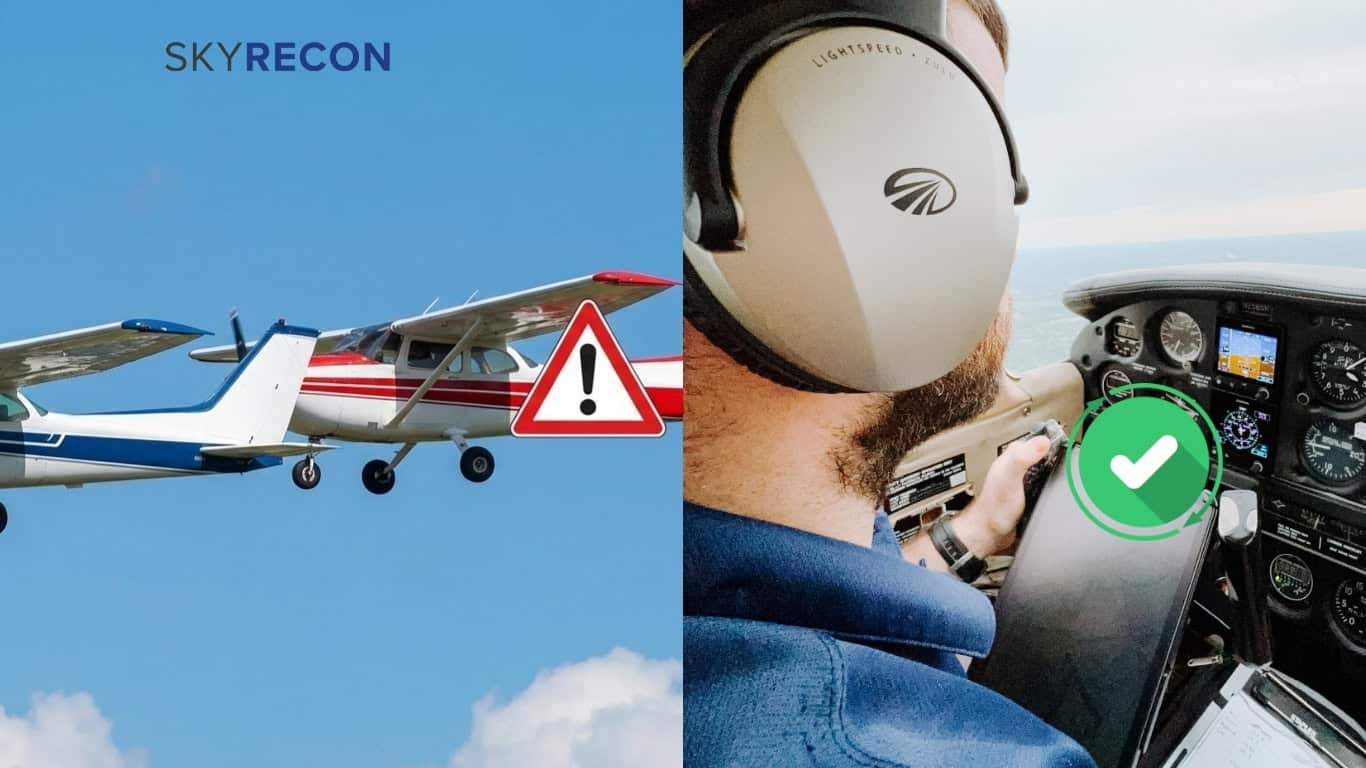
On a summer Saturday near a busy glider field in southern Germany, a touring Cessna pilot counted six aircraft on the CTAF frequency. His ADS-B In receiver showed three targets. The other three were gliders with FLARM only, invisible to standard ADS-B. That three-aircraft gap is the problem supplemental traffic data solves.
ADS-B In has transformed how GA pilots see traffic. But ADS-B alone has limits, particularly in Europe, where a large portion of the flying population carries no ADS-B Out transponder. Supplemental data from sources like SafeSky bridges those gaps and delivers a more complete airspace picture.
The Limits of ADS-B Alone
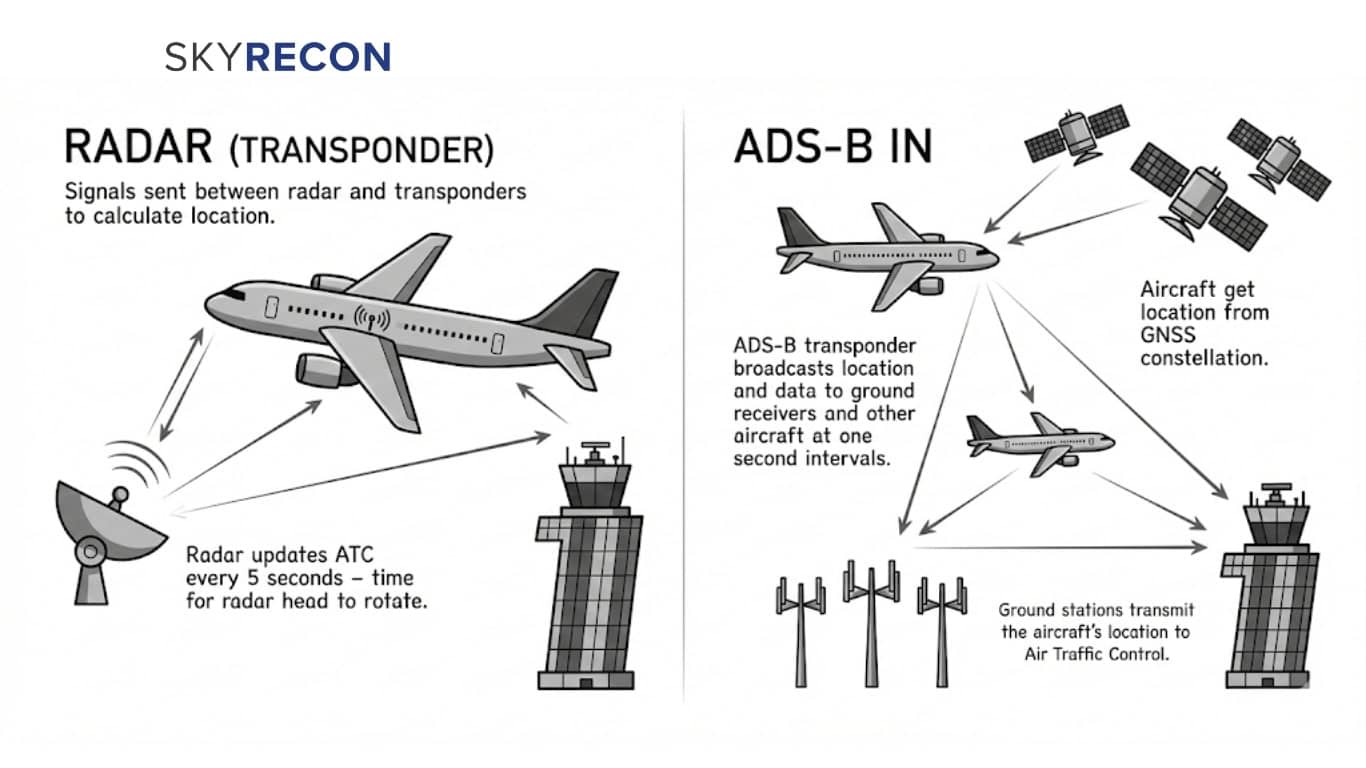
ADS-B Out has improved aircraft visibility by broadcasting positions to ATC and other pilots equipped with ADS-B In. However, many aircraft types are not required to carry ADS-B Out: gliders, ultralights, paramotors, vintage aircraft, and microlights often fly without it. In parts of Europe, this creates a patchwork where some traffic simply does not appear on an ADS-B display.
For pilots navigating these skies, the missing data creates real risk. Near non-towered airports, around glider launch sites, or in busy recreational zones, the aircraft you cannot see are often the ones closest to your flight path. For background on the underlying technology, see our post on what ADS-B is and why it matters for private pilots.
What is Supplemental Traffic Data?
Supplemental traffic data refers to position information gathered from sources beyond ADS-B. The major sources include:
FLARM. A collision-avoidance technology used widely across Europe, especially among gliders and light aircraft. FLARM devices broadcast position and predicted flight path on a dedicated frequency.
MLAT (Multilateration). A system that estimates aircraft positions by measuring the time difference of signal arrivals at multiple ground receivers. MLAT can track aircraft that carry only a Mode S transponder without ADS-B Out.
Pilot-reported positions. Some pilots use mobile apps to broadcast their location voluntarily. These app-based positions are lower fidelity than hardware transmitters but still add to the overall traffic picture.
Crowd-sourced platforms. Services like SafeSky collect data from all of the above sources, compile it, and redistribute real-time traffic information to connected devices.
SafeSky Integration with SkyRecon
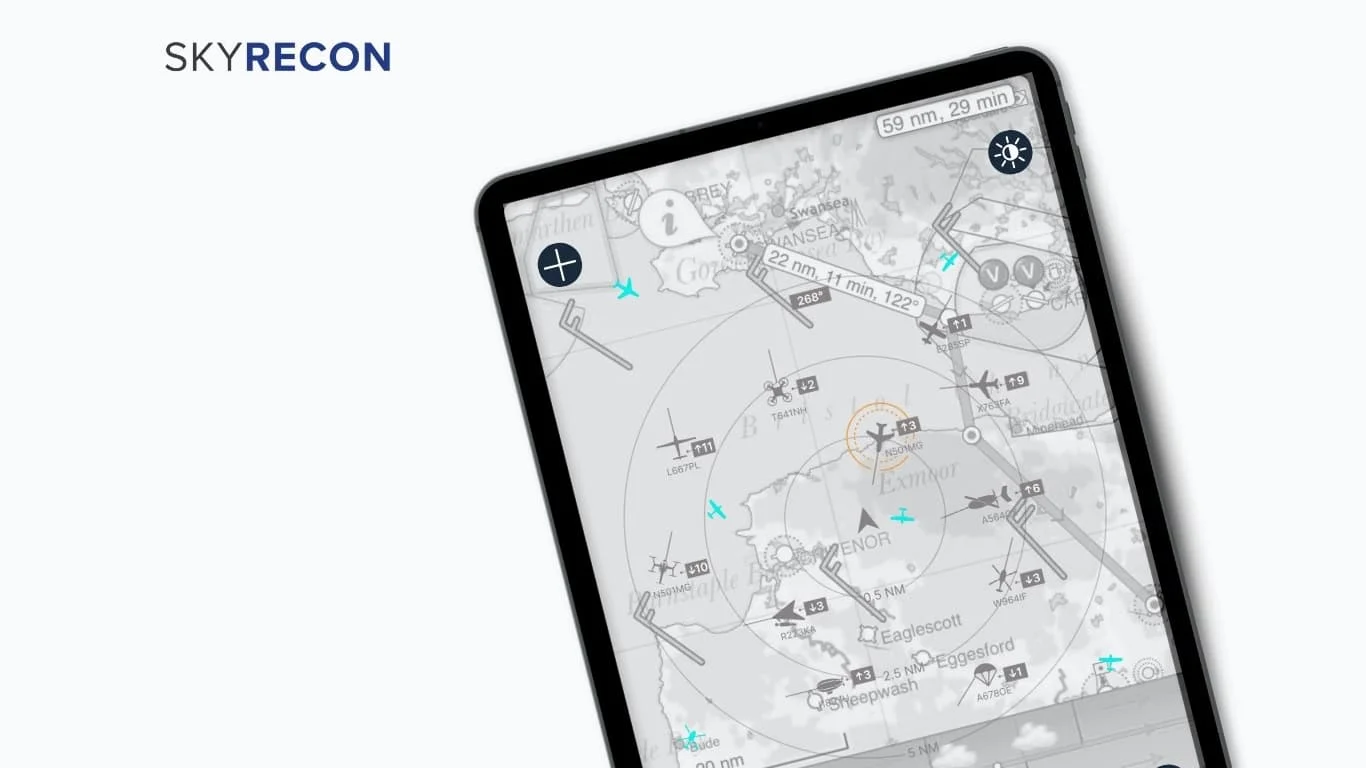
SkyRecon already displays real-time ADS-B traffic on its built-in screen. SafeSky integration extends that picture significantly. SafeSky aggregates live traffic data from multiple sources, including aircraft that do not transmit ADS-B Out signals, such as gliders, ultralights, and recreational flyers using mobile apps to broadcast their position.
With SafeSky integrated, SkyRecon displays both direct ADS-B signals and supplemented traffic data from this wide-reaching network. This is especially valuable in European airspace, where compliance with ADS-B Out varies widely by country and aircraft category. As electronic conspicuity adoption accelerates across Europe, the volume of supplemental data will continue to grow, making receivers that can ingest it increasingly valuable.
The result is a portable, standalone device that helps you see more of the sky around you, whether you are flying near busy recreational areas, non-towered airports, or transitioning through complex airspace.
How SafeSky Integration Improves Situational Awareness
Broader traffic detection. SkyRecon goes beyond ADS-B, providing visibility into traffic from non-ADS-B-equipped aircraft. A glider operating without a transponder, a recreational pilot using an app to report their position, a microlight with FLARM only: all of these can appear on the SkyRecon display through SafeSky.
Confidence indicators. SkyRecon highlights traffic data sourced from SafeSky, helping pilots differentiate between live transponder signals and aggregated data that may carry slight delays. This distinction lets pilots calibrate their scanning and decision-making to the data quality of each target.
Better awareness at non-towered fields. In regions filled with non-towered airports and recreational flying areas, SafeSky integration allows pilots to visualise aircraft in the vicinity even when those aircraft are not communicating on the local frequency. This closes one of the most common situational awareness gaps in general aviation.
Cross-border benefits. As pilots cross between countries with varying equipage requirements, supplemental data bridges gaps in traffic visibility. A device that only shows ADS-B traffic may paint a very different picture flying in the UK compared to France or Germany. SafeSky normalises that view. Understanding what electronic conspicuity means for GA pilots helps explain why this cross-border coverage matters.
Confidence in dense traffic environments. Flying near flight schools, glider clubs, or recreational hotspots means sharing airspace with a mix of aircraft types carrying varying levels of equipment. SkyRecon's comprehensive data integration helps pilots identify these aircraft before they become a surprise.
Why Supplemental Data Deserves a Place in Your Cockpit
Technology does not replace good airmanship. But having more data at hand improves decision-making in concrete ways. Supplemental data allows pilots to:
Identify potential conflicts earlier, often minutes before visual acquisition would be possible. Maintain higher confidence when flying through unfamiliar or congested airspace where traffic density exceeds what ATC can call out. Reduce cognitive workload by presenting traffic visually rather than relying solely on radio calls and out-the-window scanning. Improve safety during training flights, cross-country routes, and leisure flying where distraction risk is elevated.
Build a More Complete Traffic Picture
Relying on ADS-B data alone leaves pilots with an incomplete picture, especially in Europe's diverse GA landscape. SafeSky's supplemental traffic data fills the gaps that ADS-B misses, and SkyRecon puts all of it on a single dedicated screen in your cockpit.
Solo pilots, instructors, and club flyers all benefit. SkyRecon with SafeSky integration delivers the visibility to navigate with confidence. The more data sources feeding your traffic display, the fewer surprises you face in the air.
For the broader view of traffic awareness technology, read our Complete Guide to In-Flight Traffic Awareness for General Aviation Pilots.