A student pilot recently asked during a ground school session: "If my aircraft has a transponder, can I see other aircraft on a screen?" The answer is no, and the confusion is common. ADS-B transponders and ADS-B receivers serve opposite functions. One makes you visible. The other lets you see. Mixing them up can leave pilots with a false sense of their traffic awareness capability.
This article clarifies the difference between an ADS-B receiver and a transponder, explains why both matter, and shows where SkyRecon fits in. For a primer on the underlying technology, start with our post on what ADS-B is and why it matters for private pilots.
What is an ADS-B Transponder?
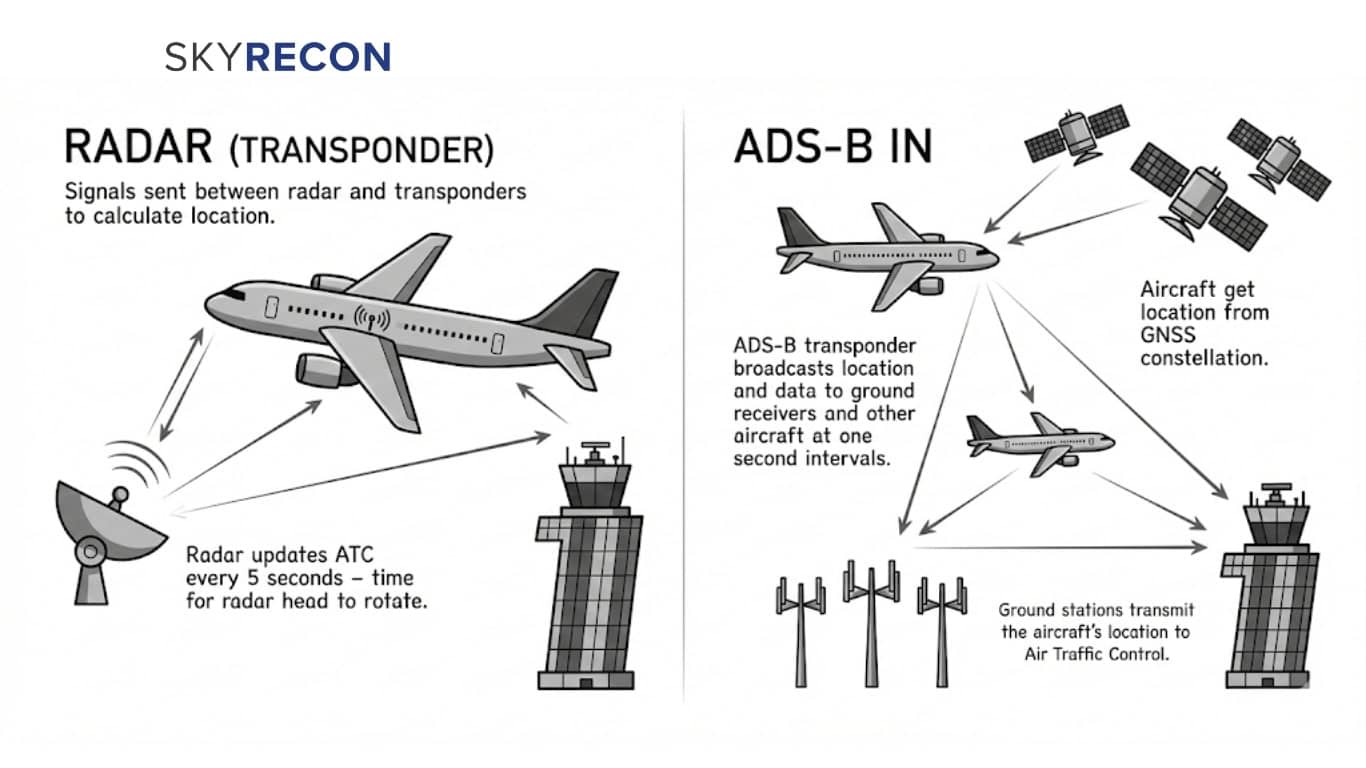
An ADS-B transponder, often called ADS-B Out, is installed avionics equipment that broadcasts your aircraft's position, altitude, velocity, and identification. The signal transmits automatically and continuously using GPS-derived position data. ATC ground stations and any nearby aircraft with ADS-B In pick up the broadcast.
In practical terms, ADS-B Out makes your aircraft visible to the surveillance system. It is required in Class A, B, and C airspace in the US (and above 10,000 feet MSL, with certain exceptions). In Europe, mandates apply primarily to larger and faster aircraft, though electronic conspicuity initiatives are pushing toward broader voluntary adoption.
Key characteristics of ADS-B transponders:
- Broadcast identification, position, altitude, and velocity
- Use GPS as the position source
- Transmit continuously without pilot input
- Require professional installation and certification
- Enhance ATC's ability to track and sequence traffic
What is an ADS-B Receiver?
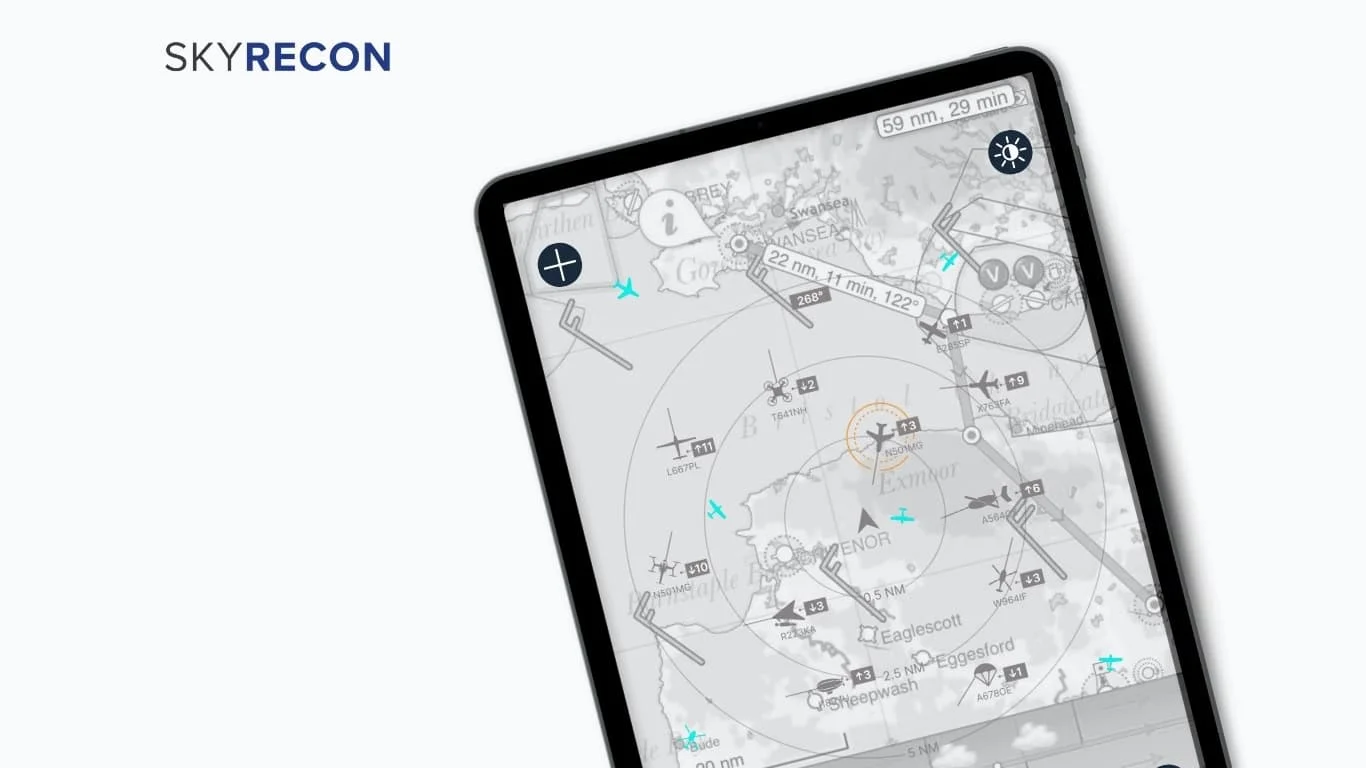
An ADS-B receiver, commonly referred to as ADS-B In, does the opposite. It picks up broadcasts from other aircraft and ground stations, then presents that data to the pilot. While ADS-B Out makes you visible to others, ADS-B In lets you see others.
The traffic information includes real-time positions, altitude, and movement data for every ADS-B-equipped aircraft within range. Some receivers also deliver weather products and airspace alerts.
Key characteristics of ADS-B receivers:
- Receive data from aircraft broadcasting ADS-B Out
- Display real-time traffic awareness in the cockpit
- Can deliver weather updates and advisories
- Available as portable devices with no installation required
- Not mandated, but strongly recommended for situational awareness
Why Pilots Benefit from Both
The most complete traffic awareness setup combines ADS-B Out and ADS-B In. The transponder ensures regulatory compliance and makes you visible to ATC and other pilots. The receiver gives you the ability to see and anticipate traffic around you in real time.
Many GA aircraft, particularly older airframes, have ADS-B Out installed (or a Mode S transponder that provides some surveillance data) but lack any ADS-B In capability. Those pilots rely on ATC traffic calls and visual scanning alone, which can leave significant awareness gaps in busy or uncontrolled airspace.
How SkyRecon Differs from Transponders and Basic Receivers
SkyRecon is not a transponder. It does not broadcast your position. It is a portable ADS-B receiver with several features that set it apart from basic receiving solutions.
Multi-source traffic data. Standard ADS-B receivers show only aircraft transmitting ADS-B Out. SkyRecon supplements this with crowd-sourced data from SafeSky, which aggregates FLARM positions, pilot-reported locations, and other feeds. The result is visibility into traffic that does not appear on typical ADS-B displays: gliders, ultralights, paramotors, and aircraft in regions with low ADS-B compliance. For more on this topic, read how supplemental traffic data enhances airspace awareness.
Dedicated cockpit display. SkyRecon has a built-in 3.5-inch round LCD screen that shows surrounding traffic relative to your position. There is no dependency on a tablet, phone, or external app. You power on the device and traffic appears.
Traffic highlighting and data confidence. SafeSky-sourced data may carry slight delays compared to direct ADS-B signals. SkyRecon's "Highlight SafeSky Traffic" toggle (on by default) lets pilots distinguish between live and supplemented targets. That transparency supports better decision-making during busy or complex flight scenarios.
Portable and plug-and-play. ADS-B transponders require professional installation and certification. SkyRecon requires neither. Move it between aircraft in seconds, which makes it ideal for pilots who rent, instruct, or fly club aircraft.
Complementary, not a replacement. SkyRecon does not replace the need for an ADS-B transponder. Pilots still need to comply with applicable mandates for ADS-B Out. SkyRecon complements the transponder by providing the receive side: eyes on nearby aircraft in real time, including those that ATC may not be tracking. As electronic conspicuity gains momentum across Europe, having a capable receiver becomes even more valuable as the number of broadcasting aircraft grows.
Who Benefits Most?
Private pilots in busy or complex airspace. SkyRecon fills gaps where visual scanning and ATC coverage fall short, particularly in transition zones and near terminal areas.
Pilots operating from non-towered airports. A clear display of traffic in the circuit significantly reduces risk during arrivals and departures where there is no controller providing separation.
Pilots flying older aircraft without integrated ADS-B In. No panel upgrade needed. SkyRecon brings receiver capability into the cockpit with zero modification to the aircraft.
Understand the Difference, Equip for Both
An ADS-B transponder makes you visible to ATC and other pilots. An ADS-B receiver lets you see and anticipate the traffic around you. Both roles are essential for safe GA operations. SkyRecon delivers the receiver side with advanced data integration, a dedicated display, and the portability to work in any aircraft you fly.
For the full picture on building traffic awareness, read our Complete Guide to In-Flight Traffic Awareness for General Aviation Pilots.