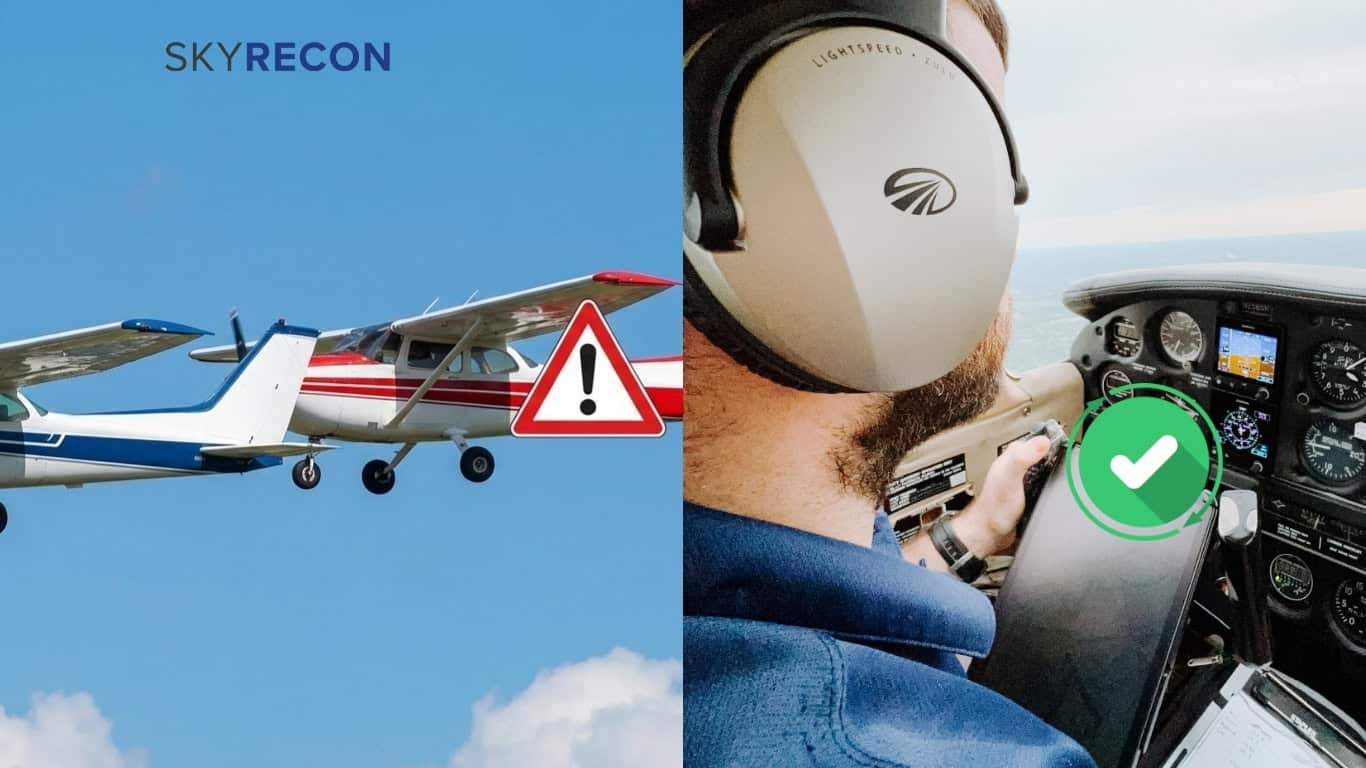
Picture this: you are cruising at 3,500 feet on a VFR cross-country and spot a fast-moving shadow crossing your 2 o'clock. By the time you visually acquire the traffic, a PA-28 passes 400 feet below you. ATC never called it. You never heard a radio call. That aircraft was broadcasting ADS-B Out the entire time, but without ADS-B In, you had no way to know it was there until your eyes found it.
ADS-B is the technology that closes this gap. Here is how it works and why every private pilot should understand it.
What is ADS-B?
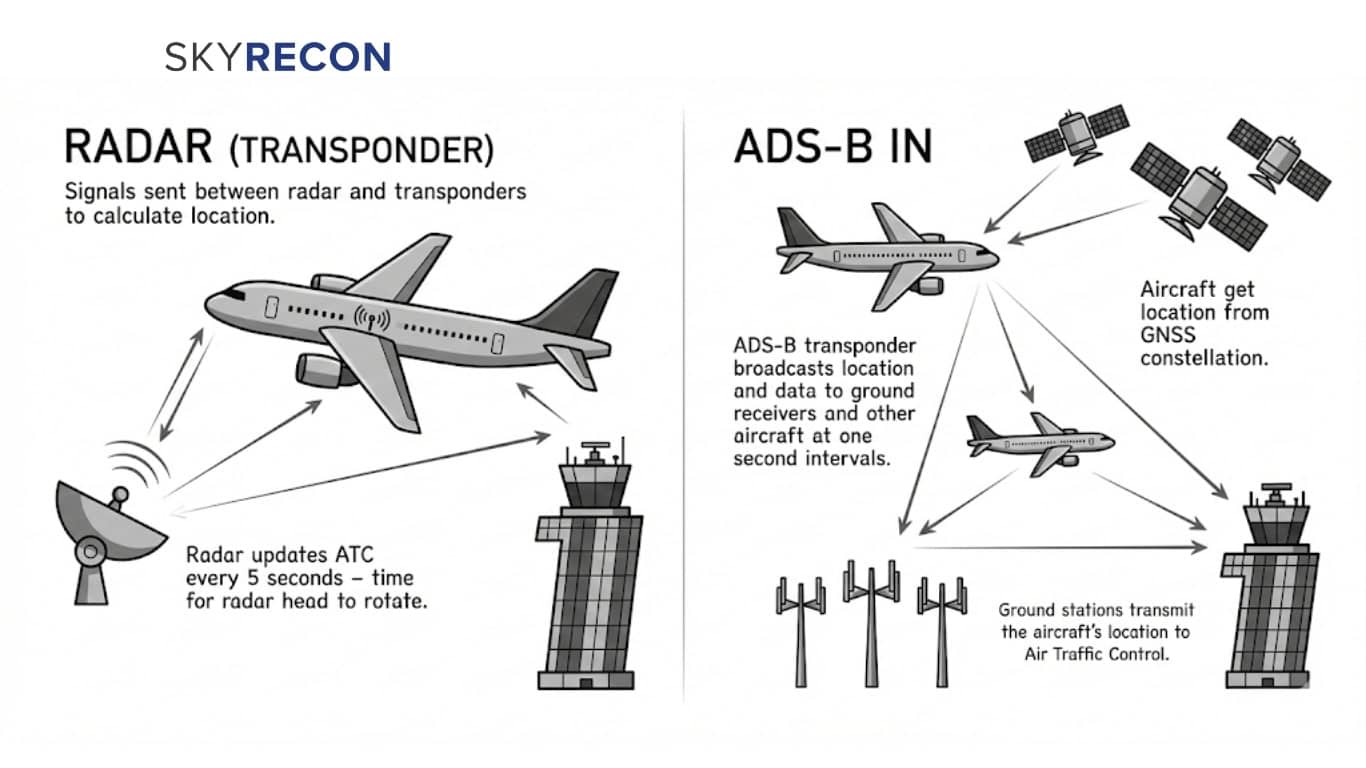
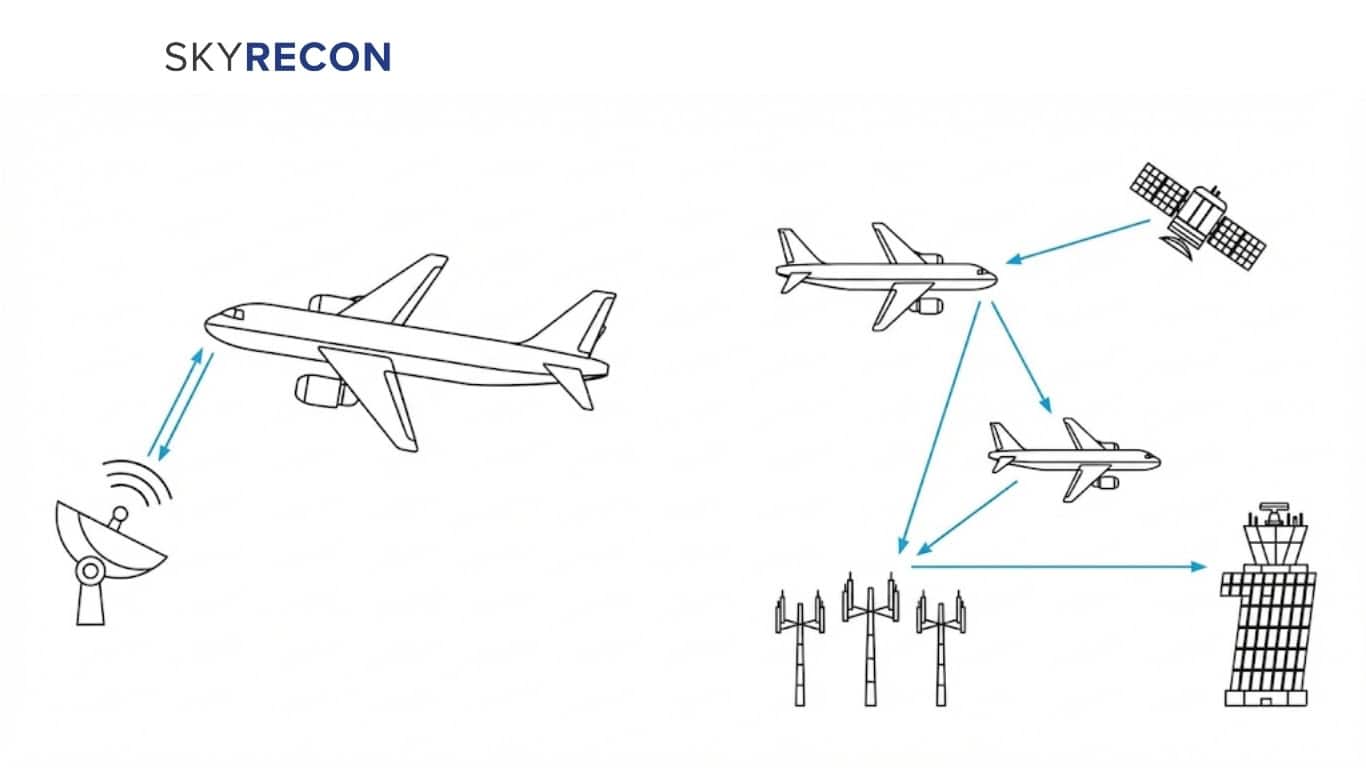
ADS-B stands for Automatic Dependent Surveillance-Broadcast. It is a surveillance system where aircraft determine their position using GNSS (typically GPS) and broadcast that position continuously on 1090 MHz or 978 MHz (UAT). Ground stations and other aircraft can receive these broadcasts. The result is a real-time picture of who is where in the sky, updated every second.
ADS-B Out
ADS-B Out is the transmit side. Your aircraft broadcasts its position, altitude, velocity, and identification. Air Traffic Control ground stations pick up the signal, and so does any nearby aircraft equipped with ADS-B In.
Since January 2020, ADS-B Out has been required for most operations in controlled airspace in the United States. In Europe, mandates are less uniform. EC regulations require ADS-B Out on aircraft with a maximum take-off mass above 5,700 kg or a maximum true airspeed above 250 knots, but most GA aircraft fall below those thresholds. Several European CAAs are now exploring broader requirements under electronic conspicuity initiatives.
ADS-B In
ADS-B In is the receive side. It picks up broadcasts from other aircraft and ATC ground stations, then displays that traffic in the cockpit. No regulatory body requires ADS-B In, but it is the half of the system that directly benefits pilot situational awareness. You can see traffic that would otherwise remain invisible until you happen to spot it out the window.
ADS-B In also delivers weather data (in the US via FIS-B) and TFR notifications, making it a multi-purpose information feed.
Why ADS-B Matters for Private Pilots
For GA pilots, ADS-B technology represents a meaningful safety improvement over the see-and-avoid model that general aviation has relied on for decades.
Traffic awareness beyond the eyeball. Before ADS-B, private pilots depended on ATC calls and visual scanning. ADS-B In shows the positions of nearby aircraft, including those hidden behind wing roots, in sun glare, or simply too far away to see.
Better decisions at non-towered airports. Flying in and out of uncontrolled fields is routine for GA pilots and frequently stressful. ADS-B In lets you see who is in the pattern, on approach, or departing, even if they are not communicating on the CTAF. That awareness makes sequencing and spacing far more predictable.
Real-time weather and advisories. Many ADS-B In devices also receive weather products and temporary flight restrictions, supporting better in-flight decision-making without needing a cellular data connection.
For more context on how ADS-B In differs from the transponder in your panel, see our post on the difference between ADS-B receivers and transponders.
How SkyRecon Enhances ADS-B for Private Pilots
Having ADS-B Out makes your aircraft visible to others. Having ADS-B In lets you see them. SkyRecon is a portable receiver that brings ADS-B In capability into any cockpit without installation or panel modifications.
Real-time traffic display. SkyRecon visualises nearby aircraft on a bright, purpose-built 3.5-inch round LCD screen. Traffic appears relative to your position with altitude separation displayed, giving you a dynamic situational awareness advantage in both VFR and IFR conditions.
Supplemental data via SafeSky. SkyRecon goes beyond direct ADS-B signals by integrating SafeSky data. SafeSky aggregates positions from FLARM, pilot-reported locations, and other crowd-sourced feeds. This is particularly valuable in European airspace where many gliders, ultralights, and recreational aircraft do not carry ADS-B Out. Understanding why electronic conspicuity matters for every GA pilot explains the broader context behind this mixed-equipage challenge.
Traffic highlighting. The "Highlight SafeSky Traffic" feature lets you distinguish between live transponder signals and aggregated data, so you know the confidence level of each target on screen.
Flight logging. With an SD card installed, SkyRecon logs flight details for post-flight review and training debrief.
Portable and simple. No installation required. Move it between aircraft in seconds. Power on and fly.
Still working out which portable device is right for you? Read our guide on what to look for in a portable traffic awareness device.
ADS-B and the Bigger Picture
ADS-B is one piece of a broader traffic awareness strategy. Visual scanning, radio communication, flight planning, and supplemental data sources all contribute to the full picture. No single technology replaces good airmanship, but ADS-B In gives private pilots access to information that was previously available only to ATC.
For the full overview of how these technologies work together, read our Complete Guide to In-Flight Traffic Awareness for General Aviation Pilots.
Start Seeing More
ADS-B technology has changed what is possible for GA safety. The question is no longer whether you can afford to equip with ADS-B In. For the cost of a portable receiver like SkyRecon, you get real-time traffic awareness, supplemental data integration, and a dedicated display that works in any aircraft you fly. That is a meaningful upgrade to every flight you make.