
If you fly a certificated GA aircraft, the avionics market has catered for you. There are panel-mount ADS-B solutions, portable options with wide dealer networks, and subscription services built around your airframe.
If you fly a two-seat ultralight, a homebuilt experimental, a microlight, or a kitplane with a minimal electrical system, the picture is considerably more complicated. Permanent avionics may require approval pathways that are difficult or impossible for your airframe's certification status. Panel space may not exist. Your electrical system may not support additional avionics loads. Your aircraft may be trailered, stored outdoors, or rotated among multiple pilots, making permanently installed hardware impractical for reasons that have nothing to do with technology.
For these pilots, a portable ADS-B receiver for ultralight aircraft is not a compromise solution. It is the right solution.
Why Permanent Avionics Do Not Work for Every Cockpit
Understanding why portable, no-installation ADS-B matters so much for this market starts with the realities of building and flying in the experimental and ultralight category.
Experimental Amateur-Built (EAB) aircraft are enormously diverse. Some are sophisticated homebuilts with full glass panels. Many are lightweight structures built for performance and simplicity, with 12V electrical systems, minimal panel real estate, and builders for whom every gram and every amp matters. For these aircraft, the installation requirements, power demands, and approval pathways associated with certified avionics products are often genuinely unsuitable for the airframe.
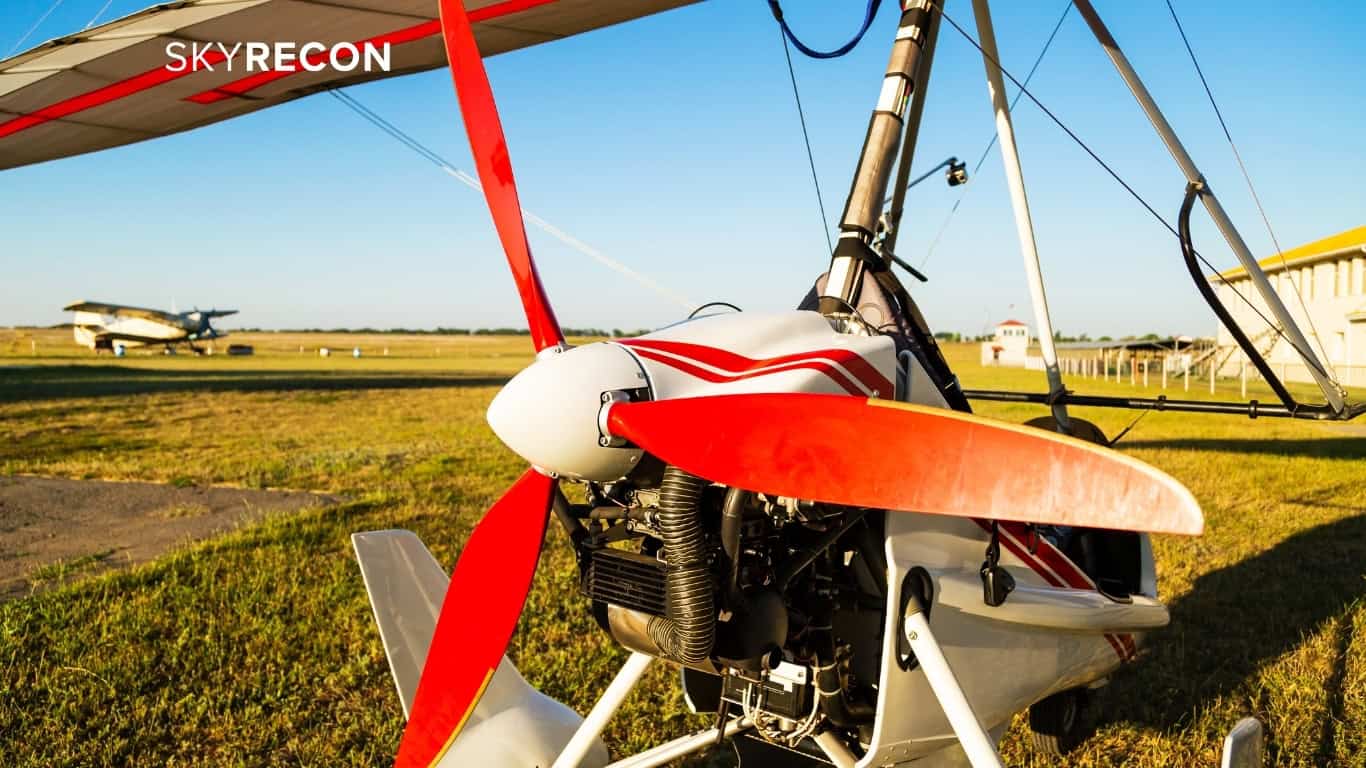
Ultralights add further constraints. Weight budgets are strict by definition: every gram of hardware and wiring is a gram taken from payload, fuel, or useful performance. Electrical systems on many ultralights are minimal. And for aircraft that are trailered regularly or shared between pilots in a club setting, permanent hardware creates maintenance complexity that a portable device avoids entirely.
A portable ADS-B receiver for ultralight aircraft with a self-contained battery mounts in seconds using the included suction-cup window mount or 1/4-inch screw-mount adapter, draws nothing from the aircraft's electrical system, and is removed at the end of every flight. No modification. No approval. No wiring. No weight penalty beyond the device itself.
The Traffic Gap Is Biggest Where Ultralights Fly
The irony of the ultralight and experimental category is that the airspace these aircraft typically operate in (low-level, uncontrolled, Class G) is precisely where the ADS-B blind spot is largest.
Low-level Class G is shared with gliders using FLARM, paramotors and hang gliders using FANET, balloon traffic, drones, and a wide range of aircraft that carry no electronic conspicuity at all and are not legally required to. A radio-only ADS-B receiver sees almost none of this traffic.
SafeSky Inside addresses this through multi-source data fusion, aggregating FLARM, FANET, OGN, Mode-S MLAT, and live community data from over 75,000 pilots actively sharing their position. For an ultralight or experimental pilot operating in the low-level mixed-traffic environment where this non-ADS-B traffic is most concentrated, the difference between radio-only reception and SafeSky Inside fusion is the difference between a partial picture and a genuinely useful one.
SkyRecon is also a proud ADS-L Coalition member, supporting EASA's push for wider electronic conspicuity across GA. As adoption grows, that standard directly benefits ultralight pilots operating in European mixed-equipage airspace.
What Matters Most When You Cannot Permanently Install
When evaluating a portable ADS-B receiver for ultralight aircraft, the criteria that matter most differ from those relevant to certificated GA with a full panel. Here is how SkyRecon addresses each one:
No installation required: SkyRecon mounts on a windscreen or panel using included accessories. Fully operational within seconds of switch-on. No wiring, no modification, no approval pathway, and removed at the end of every flight.
Up to 8 hours battery life: The built-in rechargeable lithium-ion battery provides up to 8 hours of continuous operation without drawing from the aircraft's electrical system. For ultralights with minimal electrics, this is not a convenience. It is an essential specification.
Integrated round 3.4-inch LCD screen: Displays surrounding traffic relative to your position in real time. No tablet required. For aircraft where panel space is at a premium, having traffic awareness built into the receiver removes a mounting problem entirely.
Built-in CO sensor with active alerting: Older piston aircraft with cabin heat systems, which includes a large proportion of the homebuilt and ultralight fleet, are among the highest-risk categories for CO intrusion. SkyRecon monitors cabin air and alerts audibly and visually when levels rise above the configured threshold. Important: SkyRecon's CO sensor is not a certified CO detector and should not be relied upon as a primary safety device. Always carry a certified CO detector as your primary CO protection and follow standard aviation safety procedures.
GDL90 output: For pilots who run a tablet, SkyRecon's GDL90 Wi-Fi output delivers the full SafeSky Inside traffic picture to ForeFlight, SkyDemon, or any compatible EFB. Enriching your existing navigation picture without replacing it.
Data+ SIM card tray: The Data+ variant includes a SIM card tray for you to insert your own data SIM, providing always-on SafeSky Inside connectivity independent of your phone. Ideal for pilots flying from remote strips or rural areas where mobile coverage is unreliable.
One Device Replaces Four
Weight and simplicity are the founding values of ultralight aviation. SkyRecon respects both. A single portable device replaces what would otherwise require a separate traffic receiver, a CO sensor, a dedicated display, and a mobile data source. Four items. Four power requirements. Four mounting positions. One device in a flight bag, operational in seconds, removed at the end of every flight.
For the experimental builder or ultralight pilot who wants comprehensive situational awareness without compromising their aircraft's fundamentals, a portable ADS-B receiver for ultralight aircraft that integrates everything in one self-contained unit is the logical answer to a real problem.
To see the complete picture of what SkyRecon offers across all GA categories, return to the best portable ADS-B receiver for general aviation guide.
Get in touch to learn more about SkyRecon and how it fits an ultralight panel without an install.